

This joint report by the Federation of Indian Chambers of Commerce and Industry (FICCI) and the UNEP Inquiry into the Design of a Sustainable Financial System highlights key proposals on aligning the Indian financial system with sustainability, by outlining feasible options for transformation of the Indian financial regulatory landscape, regulations and incentives that will channel finance into sustainable development priorities, and innovative markets for clean energy financing.
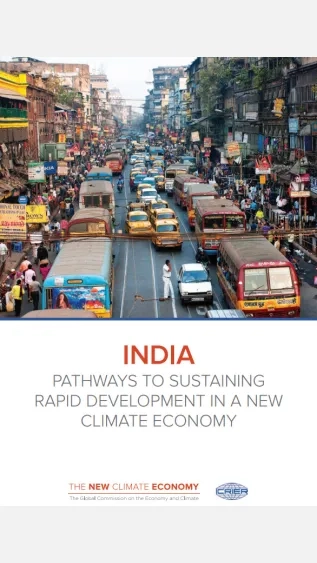
This paper India - Pathways to Sustaining Rapid Development in a New Climate Economy by the New Climate Economy’s India Initiative argues that India’s efforts to achieve rapid, inclusive and sustainable development have been hampered in the past by pervasive inefficiencies that arise from market, policy and institutional failures and weaknesses.
Every year governments spend $543 billion subsidising fossil-fuels to consumers. A new report on Fossil-Fuel Subsidies and Climate Change for the Nordic Council of Ministers from the IISD finds that removing these subsidies to consumers and society could lead to global GHG emissions reductions of between 6-13% by 2050.
With potential domestic savings to some government of between 5-30% of expenditures, and in the context of the low oil price many governments are removing subsidies. This report shows how to include national emissions reduction estimates within country contributions towards the UNFCCC using the Global Subsidies Initiative – Integrated Fiscal (GSI-IF) model.
The project on Green Growth Strategies for Indian Cities was started in January 2014. Implemented by ICLEI – Local governments for sustainability – South Asia and the National Institute of Urban Affairs (NIUA) with support and technical inputs from the Global Green Growth Institute, the project has now concluded with the launch of its 3 volume report:
Volume 1: Urban Green Growth Strategies for Indian Cities
Volume 2: Green Growth Profiles of Ten Indian Cities (Read more)
Volume 3: Green Growth Good Practices (Read more)
The project on Green Growth Strategies for Indian Cities was started in January 2014. Implemented by ICLEI – Local governments for sustainability – South Asia and the National Institute of Urban Affairs (NIUA) with support and technical inputs from the Global Green Growth Institute, the project has now concluded with the launch of its 3 volume report:
Volume 1: Urban Green Growth Strategies for Indian Cities (Read more)
Volume 2: Green Growth Profiles of Ten Indian Cities
Volume 3: Green Growth Good Practices (Read more)
This volume 2 includes detailed profiles for all of the ten cities visited. Each city profile looks at the city’s growth story from a sectorial perspective and concludes with a number of recommended strategies to help the city to make use of their untapped green growth potential.
The project on Green Growth Strategies for Indian Cities was started in January 2014. Implemented by ICLEI – Local governments for sustainability – South Asia and the National Institute of Urban Affairs (NIUA) with support and technical inputs from the Global Green Growth Institute, the project has now concluded with the launch of its 3 volume report:
Volume 1: Urban Green Growth Strategies for Indian Cities (Read more)
Volume 2: Green Growth Profiles of Ten Indian Cities (Read more)
Volume 3: Green Growth Good Practices
This volume 3 presents the 15 good practices that have been collected during the project. Each good practice refers back to the developed Framework (presented in Volume 1, Section 3) and highlights how that particular urban project example helps cities to achieve the visions of green growth described in this report