

This compendium explores greening the economy on four levels – individual, business, city, and nation. It looks at the relationships between these levels and gives many practical examples of the complexities and solutions across the levels. Scandinavia, a pioneering place advancing sustainability and combating climate change, is a unique starting point for learning about greening economies. The study includes many initiatives implemented in Scandinavia since the 1970s that are all potentially useful for other countries and contexts. Throughout this compendium, the user will find many examples with links to relevant websites, documents and films.
This policy Green Agricultural Policies and Poverty Reduction brief provides a practical guide to successfully designing and implementing green agricultural policies based on the outcomes of more than 20 projects in 17 countries.
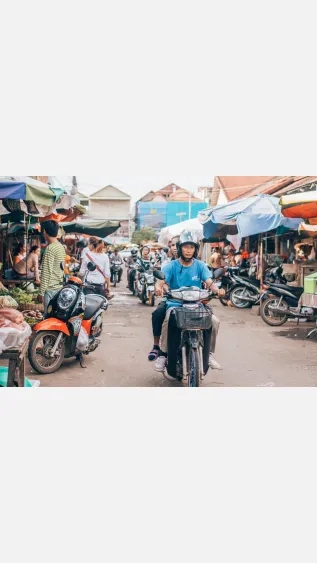
Current models examining the possible implications which changes towards a low-carbon economy may reflect for low-income countries include a look at best practices from countries such as Kenya, Cambodia and Nepal, some of which may also prove relevant for the Caribbean context. To this end, ten key measures were identified by the Overseas Development Institute (ODI) which could help such countries to remain competitive in a future low-carbon global economy. These ten measures further assisted in examining the Caribbean context and may be seen to sum up the various observations and recommendations already examined within this paper.
Pathways to Scale, the Inquiry`s third progress report, explores how innovative ideas and practices can be made more effective, adopted more widely, and taken to scale—and as a result move the trillions that are required. Scaling-up proven but limited innovations, is a common development challenge, requiring the adept handling of inevitable technical and institutional barriers, and the creation of viable pathways which can overcome outdated but often resilient conventional wisdoms.
Green Banking is any form of banking from which the country and nation gets environmental benefits. A conventional bank becomes a green bank by directing its core operations towards the betterment of the environment. Green Banking has become a buzz word in today’s banking world. It means developing inclusive banking strategies which will ensure substantial economic development and promoting environmental-friendly practices as well. This paper focuses on the Green Banking activities of the commercial banks of Bangladesh and we also tried to reason why this policy was adopted and make a comparison among the green banking practices of the commercial banks as well. The policy guidelines will also be focused. The regulations regarding Green Banking are also discussed.
This paper presents a framework for a green economy transition in tourism destinations. While the literature has suggested many models to guide sustainable tourism, very few studies have investigated the green economy in a tourism context. The main distinguishing factor between the green economy and sustainable development may be described as the acknowledgement of climate change as an existential threat to society and the aim to avoid policy, management and governance fragmentation (which has been common for environmental issues) by addressing greenhouse gas emissions, resource efficiency and social inclusiveness holistically at the economic level. This study frames the green economy concept from a tourism perspective and presents a model for translating the green economy concept into a tourism stakeholder engagement process. The model was tested in the case study of Bali, Indonesia, involving research methods such as visioning group techniques with tourism stakeholders, tourism economy and employment forecasting, resource efficiency estimates as well as resident and visitor surveys.