
This report is a documentation of the joint public expenditure review of Environment and Disaster Risk Management for the 2006 to 2012 period. Public Expenditure Reviews (PERs) involve the analysis of allocation and management of public expenditures and may cover all government expenditure or focus on a few priority sectors such as agriculture, water, land, infrastructure and others.

This report discusses efforts to transform a one-way plastics usage system into a closed-loop system, illustrated with challenges, solutions, and national regulations.
The Inclusive Wealth Report 2014 (IWR 2014) aims to provide a comprehensive overview of the status of capital stocks of three key assets for nations. These assets are tracked over the past 21 years, and the sustainability implications of trends and changes in these assets are appraised.
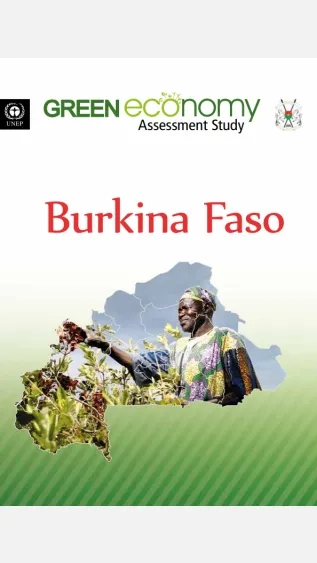
This Green Economy Assessment Study – Burkina Faso has been prepared under the scope of UNEP’s Green Economy Initiative (GEI), which was launched in 2008. The overall goal of this study is to facilitate Burkina Faso to seize the opportunities that transitioning to Green Economy can offer.
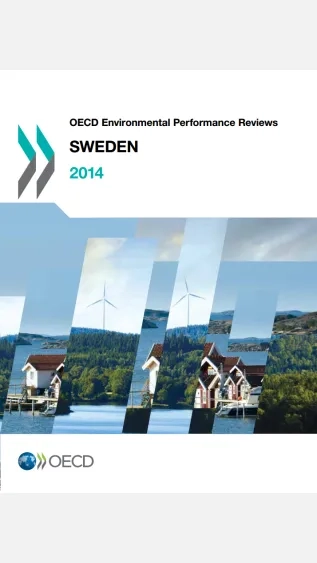
This report is the third OECD review of Sweden’s environmental performance. It evaluates progress towards sustainable development and green growth, with a focus on Sweden's longstanding commitment to mitigating emissions of greenhouse gases and its management of marine ecosystem services and water.
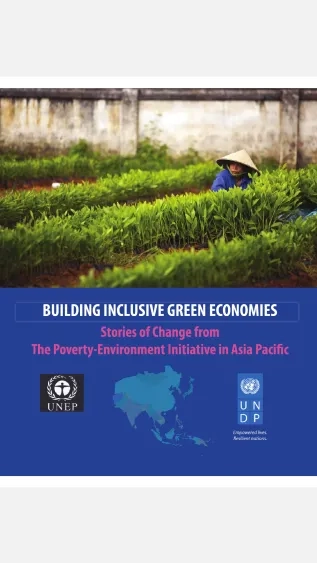
The rapid growth experienced in Asia has come at a cost to our environment, such as air pollution, water contamination and scarcity, chemicals in soils and food and over- exploitation of forest and marine resources. This unsustainable approach to growth has significant and immediate impacts on people, particularly the poor and marginalized people whose livelihoods largely depend on natural resources. Climate change has already, and will continue to, intensify these problems.
The UNDP-UNEP Poverty Environment Initiative (PEI) offers a unique way of tackling these issues together by offering policy options to governments on how sustainable use of natural resources can help reduce poverty and maintain economic growth. With strong support from six donors globally, PEI in Asia Pacific is working with nine countries to mainstream pro-poor natural resource management into economic policies and decision making to achieve more inclusive green economies.