
In 2016, the European Council approved the new climate and energy targets that would lead the EU action through to 2030. While these policies mark progress towards the EU’s long-term decarbonization objective, there are some contradictions to consider. Most notably, although the 20-20-20 package was in place, in the last few years the energy mix of some EU countries showed an increased reliance on fossil fuels. In addition, total emissions in Europe declined, but mainly because the economic crisis reduced energy demand in many EU Member States. The new European framework therefore comes at a critical time particularly because the 2030 policy commitments should be able to cope with this contradictions and actually promote investment into low-carbon sources. The article will explore these issues by discussing what would be the consequences of these targets into the energy market.

The issue note focuses on one aspect of the social consequences of green growth, the labour market aspect, bearing in mind the importance of differences across countries, particularly by level of development, with the hope that it can provide some ideas for improving policy formation and analysis. It discusses the analytical frameworks that have informed past economic analyses of the potential impact of various green growth policies on labour markets, suggesting possible directions for future development of models to enable better analysis of potential impacts (Section 2). It then sketches some of the implications of the various frameworks for the likely distributional impacts of green growth policies (Section 3). In Section 4, evidence from countries’ experience with environmental policies is considered, along with empirical work on the likely future impacts of green growth policies. This leads to a discussion of how to mitigate potential adverse impacts of green growth policies on workers and households (Section 5).
This study highlights the role of the entire financial system in the transition to a green economy and reviews green financial sector policies in emerging and developing economies. It focuses on the political and legal framework conditions, which are essential for a successful financing for green growth. On the basis of ten case studies in emerging and developing countries, the study investigates which strategies, policies and specific policy instruments have been applied at the national level, and how these have directly or indirectly influenced the actions of organisations operating in the financial sector. The study also aims to provide an analytical framework for key stakeholders (governments, donor institutions and the private sector), providing guidance before initiating and building a conducive framework for financing green growth.
Shifting public and private investment from "brown" to "green" is an essential part of climate change. The post-2020 climate agreement to be agreed at COP 21 in December 2015 has the potential to play a significant role in signalling the importance of such a shift. This paper explores how the 2015 agreement could spur further mobilisation of climate finance by examining the current state of play regarding existing financing environments and mechanisms. These include examining the existing international institutional arrangements under the UNFCCC to see how balanced financing, co-ordination, streamlining and complementarity between institutions could be achieved. The paper also highlights the key role that in-country enabling environments can play in further mobilising public and private climate finance, and discusses how the 2015 agreement could enhance both "pull" and "push" factors for mobilisation. In addition, the paper also discusses how the agreement could facilitate the broad use of a spectrum of financial instruments and the further development of an enhanced system for measurement, reporting and verification of climate finance.
The most comprehensive inventory of climate finance to-date, The Global Landscape of Climate Finance 2014, finds that global climate finance flows have fallen to USD 331 billion – far below even the most conservative estimates of investment needs. It also provides a detailed overview of the methodological challenges involved in tracking global climate finance flows. In addition to that, this report supports serious debate on these key questions by drawing together climate finance data from numerous sources to present policy makers with the most comprehensive information available about the scale, key actors, instruments, recipients, and uses of finance supporting climate change mitigation and adaptation outcomes.
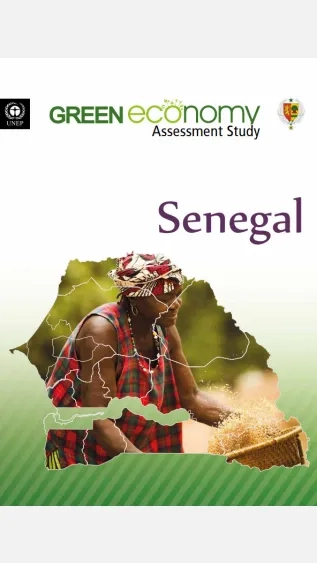
This Exploratory Report on the Green Economy (ERGE) Green Economy Assessment Study - Senegal was created under the Green Economy Initiative launched by the United Nations Environment Programme (UNEP) in 2008. It aims to enable Senegal to seize the opportunities offered by the green economy.