

Search

Search Results
Default Image

This paper has been prepared by the 'The Inquiry into the Design of a Sustainable Financial System' team as the second progress report on the Inquiry’s ongoing work.  It is a follow up to the first update ‘An Invitation’. The report draws on work of many others, including Council Members, Special Advisors and Participant-Observers, country partners and wider networks, commissioned work and publications cited in the text, as well as interview participants in the Inquiry’s scenarios work. Quotes from Council Members in the text are drawn from the 2nd Advisory Council Meeting held in New York on September 26th.  The briefing describes what the Inquiry has found to date in their ground-level engagement in diverse country contexts from Bangladesh to Brazil, China, South Africa, the US and Europe, as well as setting out initial scenarios work framing the Inquiry's analysis of what it takes to create a sustainable financial system.

Default Image

The African Development Bank’s Strategy for 2013 to 2022 seeks to promote high quality growth in Africa. The Strategy focuses on two overarching objectives to improve the quality of growth across the African continent: inclusive growth, and the transition to green growth. It has five priority pillars which are intended to frame the Bank’s country and regional integration strategies: improved infrastructure, governance, private sector development, skills and technology, and regional integration. And it has three areas of special emphasis: fragile states, agriculture and food security,and gender. Green growth contributes to all of these objectives. The purpose of this framework document is to provide Bank staff with a common foundation on the principles and practice of green growth by describing the rationale and approach and providing orientation on strategic entry points for action, methodologies, financing and monitoring progress. As such the framework is intended as living document, which serves as a first common reference source and is complemented by sector guidance notes and thematic publications.

Default Image

The paper studies two empirical correlations: one between economic growth and environmental impacts, and the other between the lack of economic growth and unemployment. It is demonstrated that, at a global level, economic growth is strongly correlated with environmental impacts, and barriers to fast decoupling are large and numerous. On the other hand, low or negative growth is highly correlated with increasing unemployment in most market economies, and strategies to change this lead to difficult questions and tradeoffs. The coexistence of these two correlations – which have rarely been studied together in the literature on “green growth”, “degrowth” and “a-growth” – justifies ambivalence about growth. To make key environmental goals compatible with full employment, the decoupling of environmental impacts from economic output has to be accompanied by a reduction of dependence on growth. In particular, strategies to tackle unemployment without the need for growth, several of which are studied in this article, need much more attention in research and policy.
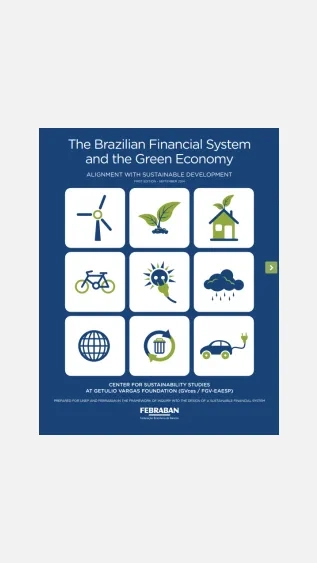
The report, The Brazilian Financial System and the Green Economy: Alignment with sustainable development, discusses innovation in public policies, regulatory framework and successful international initiatives capable of speeding up the allocation of resources by the financial system to the Green Economy.
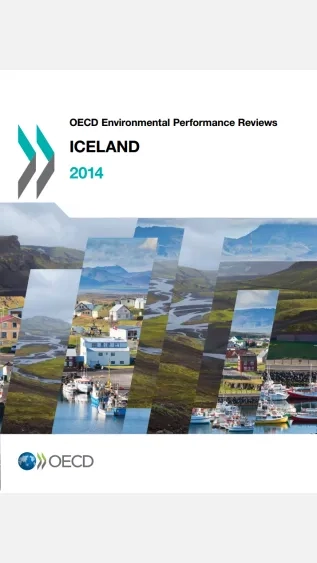
This report is the third OECD review of Iceland’s environmental performance. It evaluates progress towards sustainable development and green growth, with a focus on the environmental aspects of Iceland's energy and tourism policies.
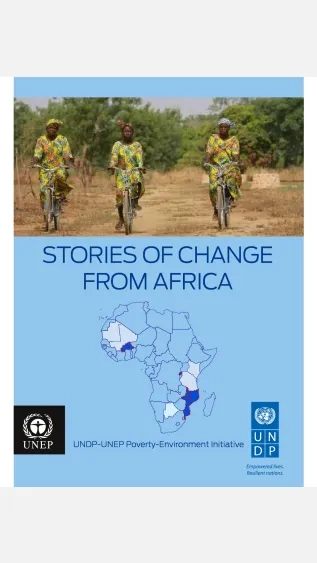
This short publication brings together inspiring Stories of Change from Africa which aim to motivate governments, stakeholders, and the international development community to continue to work together to break down the silos between poverty and environment.