
The publication New Economy of Nature provides a readily understandable introduction to the subject and illuminates the concepts and instruments that follow from the idea of monetarizing nature.
The report Review of Regulation in Renewable Energy provides an analysis of how South Africa’s renewable energy sector has been developing. It identifies the key players, policies and regulation that have shaped the development of the sector.
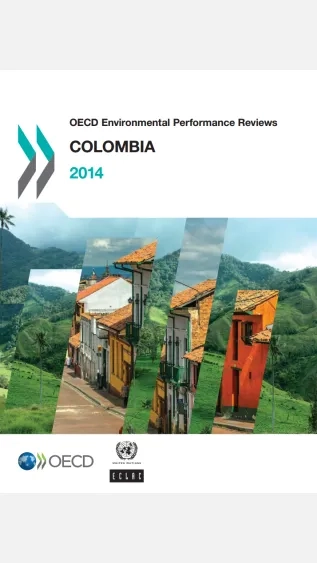
This report is the first OECD review of Colombia’s environmental performance. It evaluates progress towards sustainable development and green growth, with a focus on waste and chemicals management and policies that promote more effective and efficient protection and sustainable use of biodiversity.
Economic recession has limited national budget spending and the lending capacities of commercial banks for the realization of infrastructure projects in the field of energy generation, transmission and distribution.
This article highlights the potential of Private Public Partnerships (PPPs) for accessing finance and reducing capital expenditure (capex costs) of energy infrastructure projects in this current time of shrinking financial resources, which have widened the gap between public and private funding. The article points out that through PPP, the private and public sectors can reach a mutually beneficial agreement: the private sector can have the guarantees it needs to face risks entailed in the time gap between the project’s planning phase and its actual implementation, whereas the public sector can obtain capital investment and management expertise.

In Morocco, the potential for solar and wind energy generation is enormous and could be exploited for addressing not only energy security concerns, but also pressing social and economic needs. Smart policy design that integrates different policy objectives can have long-lasting effects, stimulating competitiveness across the economy.
This discussion paper hypothesizes that these findings were at least partly driven by the tendency of FSC certification to attract already- sustainably managed forests and by the governance challenges of community forestry in developing countries. One implication is that policymakers using FSC certification to generate environmental benefits may want to target forests with less-than-stellar management—particularly in the case of reduced emissions from deforestation and degradation (REDD) initiatives that emphasize improvement beyond business-as-usual—and to build the community and legal institutions needed for sustainable forestry.