

This policy manuel aims to help the European Union’s Eastern Partnership (EaP) countries – Armenia, Azerbaijan, Belarus, Georgia, Moldova and Ukraine – design or reform economic instruments related to environmentally harmful products. Within the broad range of economic instruments to promote greener growth, this manual addresses instruments directed at changing consumer purchasing behaviour (product taxes) and those targeting improvements in waste generation and management (deposit-refund systems and extended producer responsibility schemes). The main target audience of this policy manual includes government stakeholders (ministries of environment, economy and finance) as well as business communities, non-governmental and academic institutions in EaP countries.
Mekong countries remain relatively well-endowed in natural capital, but signs of pressure and stress on the region’s natural capital are becoming more apparent alongside rapid rates of growth and market development. Escalating land, resource and infrastructure demands arising from urbanization and industrialization combined with a rapidly growing human population means that biodiversity and ecosystem services in the Mekong countries currently face unprecedented threats. At the same time, climate change is affecting ecological productivity and economic vulnerabilities in ways that may encourage even greater pressures on the natural system and cause progressively greater stresses to human and economic systems.
This report focuses on the wind and solar PV sectors in India. It reviews the Indian policy framework for increasing the share of renewables in the energy mix within the context of multiple social, economic and technological objectives. Based on this analysis, it concludes that while support to the industry has come at a relatively low cost, development has been slow and many policies have been found wanting when evaluated against the originally proposed goals.
The report suggests that ‘green ’rather than ‘industrial’ elements have been best supported by policy to date. Impacts are most clearly seen in energy security and access, avoided health costs and the abatement of greenhouse gas emissions, while the industrial policy element has fared poorly in comparison. Marrying the two elements more completely will allow the benefits of a renewable energy manufacturing sector and environmental protection to be successfully realized.
Start-up firms play a crucial role in bringing to the market the innovations needed to move to a greener growth path. Risk finance is essential for allowing new ventures to commercialise new ideas and grow, especially in emerging sectors. Still, very little is known about the drivers and the characteristics of risk finance in the green sector. This paper aims to fill this gap by providing a detailed description of risk finance in the green sector across 29 OECD and BRIICS countries over the period 2005-2010 and identifying the role that policies might have in shaping high-growth investments in this sector. Results are drawn from a comprehensive deal-level database of businesses seeking financing in the green industry combined with indicators of renewable policies and government R&D expenditures.
This report describes a pilot project to design an integrated framework to inform and support land use planning. It analyses interaction of social, economic and environmental factors in shaping future land use needs through a transparent system dynamics simulation model and generates projections up to 2035 to analyse the short, medium and longer-term consequences of road construction on society and land use in the DTL, along the ‘Road to Dawei’. The aim is to allow policymakers, land use planners and other interested stakeholder to test the multi-dimensional impact of green economy interventions aimed at improving sustainability in the area. Results are communicated in biophysical and economic terms, also including the valuation of natural capital (stocks, flows and ecosystem services). Though still in initial stages of development, this study has already helped understanding the key drivers of change in the area, identifying data collection needs, and defining their use to carry out a green economy analysis.
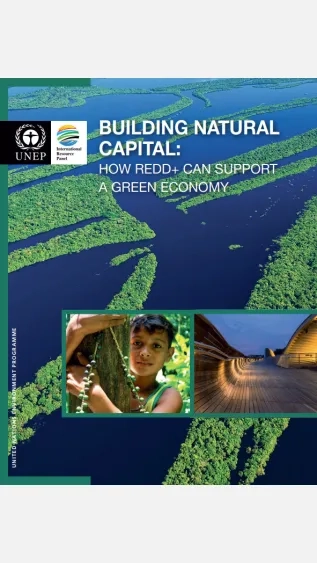
This report advocates placing REDD+ into a larger landscape scale planning framework that can, and should, involve multiple sectors (especially those that are driving deforestation, sometimes inadvertently). This would go beyond forests to also serve the needs of energy, water resources, agriculture, finance, transport, industry, trade, cities, and ultimately all sectors of a modern economy. REDD+ would thereby add value to many other initiatives that are being implemented within these sectors. No longer simply an intriguing pilot effort, REDD+ would take its place as a critical element in a Green Economy.