

The concept of the green economy presented in three reports from leading global organizations is examined in this paper. These include the United Nations Environment Programme's Towards a Green Economy, the World Bank's Inclusive Green Growth and the Organisation for Economic Co-operation and Development's Towards Green Growth. The main critiques of the concept of the green economy are also considered. Contrary to views that the green economy merely represents ‘green-washing’ and tweaking of the current economic system, this paper concludes that the green economy has the potential to effect substantive and transformative change towards the goal of sustainable development.
Green growth was a key theme of 2012's Rio+20 conference. There is, however, confusion about what should be sustained: Is it all encompassing development? Is it economic growth, greened or otherwise? Or is it human well-being? This commentary compares these concepts within a framework of sustainability categories. The reality test of measurability points to green growth rather than all-inclusive wealth, welfare or holistic development.
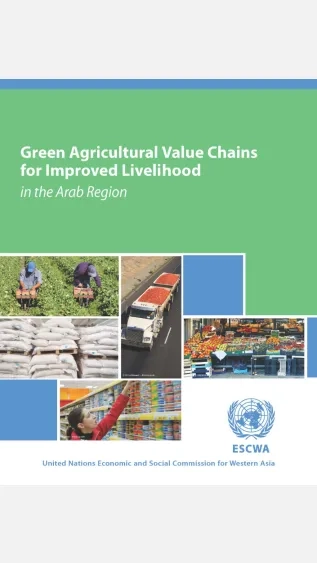
This report aims at informing and supporting the development of a competitive agriculture and food sector in the Arab region, through a review and analysis of agricultural and food value chains.
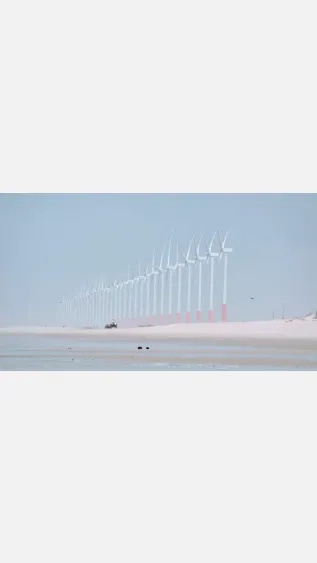
This paper offers an initial assessment of the use, potential usefulness and legality of local content requirements (LCRs) in renewable energy policy. By scrutinising existing empirical evidence on LCRs, the authors identify a number of initial basic conditions that determine the effectiveness of such measures in creating domestic industries. The paper provides an in depth analysis of the wind LCR in China, and descriptive analyses of other LCRs used in the promotion of renewable energy around the world. It further qualitatively addresses the question whether or not local content requirements and medium-term innovation could be aligned. Finally, it discusses the legality of the measures under WTO law.
Other case studies include Canada, Spain, Italy, France, Greece, Croatia, the United States, India, Brazil, South Africa and Turkey.
Once again, the international community focuses on the preservation of Amazonian forests, in particular through a bundle of initiatives grouped under the term of REDD+. Initially focusing on reducing carbon emissions, the REDD+ process became increasingly linked with developmental goals that represent the primary interest of all Amazon countries. In consequence, REDD+ can be seen as another attempt to achieve the twin goals of environmental protection and rural development, and consequently, relies on the strategies and tools of past efforts. Against this background, we explore past experiences with key strategies for environmental protection and poverty alleviation in the Amazon to critically reflect about the potential of REDD+ to contribute to sustainable local development in the region. The analysis demonstrates that initiatives that pursued environmental goals mostly led to more restrictions and bureaucratic barriers to local forest users, while the prevailing approaches to promote rural dwellers showed ambivalent environmental outcomes.
The focus of this paper World in Transition: Governing the Marine Heritage is on the rules governing the conservation and sustainable use of the oceans, and above all on how we can ensure that these rules are implemented.