

Green growth is vital to secure a brighter, more sustainable future for developing countries. Developing countries will pay a high price for failing to tackle local and global environmental threats because they are more dependent on natural resources and are more vulnerable to resources scarcity and natural disasters.
This book presents evidence that green growth is the only way to sustain growth and development over the long-term. Green growth does not replace sustainable development, but is a means to achieve it. Green growth values natural assets, which are essential to the well-being and livelihoods of people in developing countries, and if policies are designed to respond to the needs of the poorest, green growth can contribute to poverty reduction and social equity.
Every day, unsustainable patterns of consumption, unsustainable production methods and population growth challenge the resilience of the planet to support human activities. At the same time, inequalities between and within societies remain high leaving billions with unmet basic human needs and a disproportionate vulnerability to global environmental change. To counteract this trend, UNEP and SETAC have worked together to develop the current work Towards a Life Cycle Sustainability Assessment. This has been achieved through the UNEP/SETAC Life Cycle Initiative.
A key objective of the UNEP/SETAC Life Cycle Initiative is to help extend life cycle assessment (LCA) methods and practices. One major achievement has been the development of methods and techniques that can measure sustainability and allow LCA to support decision-making toward more sustainable product and process systems. In this way, life cycle techniques can be used to carry out life cycle sustainability assessments. This guidance document provides a starting point for learning about the methodologies and techniques suitable for life-cycle-based ways of measuring sustainability.
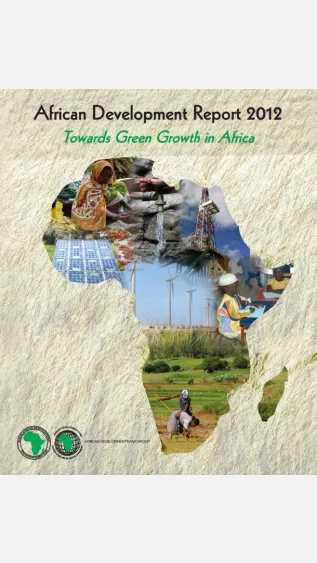
The Report shows that greening solutions not only result in environmental benefits, but also contribute to the economic development of Africa and meet social needs.
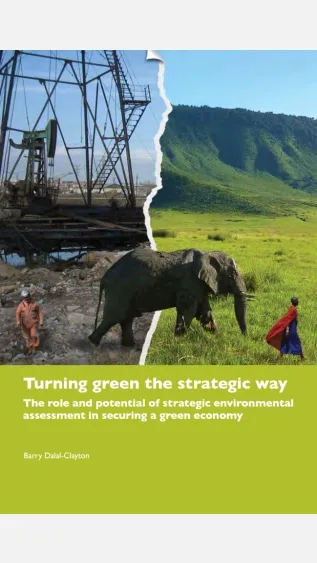
Strategic environmental assessment (SEA) is a powerful process for integrating environmental and linked social and economic concerns into policy-making, planning, programme development, mega projects and development decision-making. Over the last 20 years there has been increasing uptake of SEA around the world. More than 60 countries at all levels of development (including all 27 EU member states) now have legislation, policies, directives or regulations prescribing the application of SEA, and many more are introducing it as part of their policy toolkits – although it is not necessarily used effectively and many development actors are unaware of its function, value and potential. At the UN Rio+20 conference in 2012, the emergent green economy concept was a central theme, but it was agreed that nationally (as opposed to globally) driven approaches should be the way forward, so that green economy policies can be properly tailored. Attention has therefore turned to how SEA can help in promoting a transition to green economic development.
The Low Carbon Society Blueprint for Iskandar Malaysia 2025 presents comprehensive climate change mitigation policies, inlcuding low carbon society actions and sub-actions, and detailed strategies including measures and programs to guide the development of Iskandar Malaysia towards achieving its vision of ‘a strong, sustainable metropolis of international standing’ by 2025.
The Summary for Policymakers offers a concise synopsis of the report, facilitating quick and convenient reference to the Blueprint’s 12 low carbon society actions and the potential carbon emission reductions achievable from the implementation of the actions in Iskandar Malaysia. To provide an effective framework for guiding development in Iskandar Malaysia towards a low carbon society by 2025, the Blueprint adopts the ‘work breakdown structure’ approach that collapses each of the 12 low carbon society actions into sub-actions and, in turn, into measures and detailed programs.
By presenting a selected number of successful national experiences from 2012, the progress report illustrates the different levels at which the International Labour Organization (ILO)'s Green Jobs Programme operates. The report also provides an update on the activities which will unfold in 2013 with the continued support of the Programme’s networks and partners.
This report includes case studies on Mexico, Kenya, Thailand, South Africa, the Dominican Republic, China, Turkey, Zambia and Indonesia.