

This paper describes how Africa’s wind energy markets have evolved over the years and the structural characteristics affecting the development of wind energy projects on the continent; providing what we believe is the first mapping of the continent’s wind energy market. Results from an analysis of 94 projects on the continent suggest that wind energy markets remain small, concentrated and nascent in nature. While an increasing trend in the number and size of projects being implemented has been observed, the papers shows that wind energy contribution to the energy mix in Africa will remain unchanged over the long term. A key observation in the paper is that wind energy has limited potential to address the issue of access to electricity in Africa mainly due to the intermittent nature of electricity output from wind power plants.
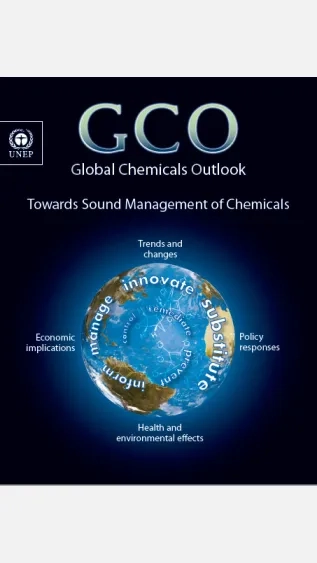
The "Global Chemicals Outlook: Towards Sound Management of Chemicals" report covers trends and indicators for chemical production, transport, use and disposal, and associated health and environmental impacts; economic implications of these trends, including costs of inaction and benefits of action; and instruments and approaches for sound management of chemicals.
The report Green Jobs and Related Policy Frameworks: An Overview of South Africa includes an analysis of national-level policy and strategies on green jobs in South Africa.
In this perspective, the project “Enhancing South-South Cooperation – Building the Capacity of Developing Countries to Promote Green Economies” provides a forum to share the South’s various experiences and national-level initiatives for transitioning to resource efficient, low carbon and socially inclusive economies. The project also addresses the use of indicators for green economy policymaking, implementation and evaluation. Through this knowledge exchange platform, it aims to raise awareness of different concepts and, at the same time, inspire and support the participant countries of the ASEAN region in pursuing their pathways to sustainable development.
One main theme in the Rio+20 Conference was how to facilitate the growth of green industries. How can politicians more specifically promote renewable green industries such as wind turbines or solar energy? How can we get prices right in the market? Prices can be adjusted by the use of economic instruments such as taxes and subsidies. In this way, renewable energy sources and green industries become more competitive, thus enhancing the transition from brown to green economy. Not only can these economic incentives accelerate the so-called switch point in time from fossil fuel–based energy sources to those not based on fossil fuel, they also encourage innovation. An illustrative example of this logic in practice is the case of Danish wind energy production.
This study assesses progress in the Arab region towards the green economy. It reviews the adoption and implementation of policies to support the transition and examines the achievements of different sectors. The study identifies challenges and highlights potential opportunities for countries to green their economies. Given their vital economic role, the study focuses on the transition of small and medium enterprises (SMEs) to greener processes, products and services.