

The report ‘Going Green: How cities are leading the next economy’ provides an up-to-date overview on the experiences of 90 cities around the world in the transition to the green economy.
This report aims to help environmental and other competent authorities in OECD countries to promote green business practices among small and medium-sized enterprises (SMEs). It analyses different ways to establish environmental regulatory requirements for facilities with low environmental risk (most of which are SMEs). It also examines how to design and apply information and market-based tools to promote compliance with such requirements and adoption of cleaner technologies and good environmental management practices. The report suggests several ways to increase the effectiveness of these promotion tools with respect to the SME community.
The report addresses the roles of environmental authorities, local governments, business organisations and financial institutions in the greening of small businesses. It reviews in detail the experience of France, Ireland, Korea, the Netherlands and the UK (England, Wales, and Scotland) and draws on examples of several other countries.
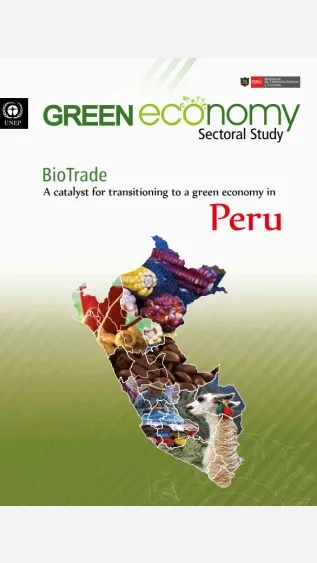
The main purpose of the study is to build a framework that will strengthen Peru’s BioTrade-related national programmes and will serve as a catalyst for the country’s transition to a green economy. The study bases its analysis on a review of the most relevant existing literature on BioTrade and on an extensive consultation process with stakeholders involved in the development of BioTrade in Peru (e.g. specialists, policy-makers, donors, commercial investors).
This study will be a useful resource for policy-makers, such as the Ministry of Economy and Finance, the government authority that draws policies regarding the creation of incentives to improve the environment for additional investment opportunities. The study offers suggestions, including the use of financial and economic instruments, to promote further growth of the BioTrade sector. The study also supports the National BioTrade Commission’s efforts to build a better public understanding of BioTrade and to raise the general awareness about the sector within the Peruvian society.
This publication Rebuilding Fisheries: The Way Forward analyses the issues and challenges governments face as they develop and implement plans to rebuild fisheries.
The Development Co-operation Report is the key annual reference document for statistics and analysis on trends in international aid. The Development Co-operation Report 2012 seeks to provide insights into how to address today’s sustainable development challenges, with a focus on inclusiveness and good governance to ensure that the world's finite resources are equitably distributed, now and in the future. Sharing finite resources among a growing number people – and consumers – is a critical challenge. It is in this spirit that J. Brian Atwood, Chair of the OECD Development Assistance Committee (DAC), invited several intellectual leaders on the challenges of inclusive, sustainable development to contribute to this year’s report.
The Tourism Background Report is an extended version of the Tourism Chapter of the “Green Economy Report” (GER), which makes the case for investments in greener and sustainable tourism as a means to create jobs and reduce poverty while also improving environmental outcomes. The Report analyzes the main variables that influence tourism development and aims to demonstrate that concerted “greener” policies can steer the growth of the sector toward a more sustainable path.