
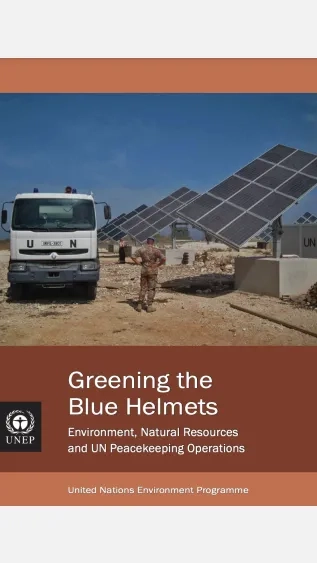
This report aims to provide a comprehensive overview of how peacekeeping operations affect and are affected by natural resources and environmental conditions. The report is divided into two main parts.
The Second Environmental Performance Review of Romania takes stock of the progress made by Romania in the management of its environment since the country was first reviewed in 2001.
This OECD Environmental Performance Review provides an independent assessment of Germany’s progress in achieving domestic and international environmental policy commitments, together with policy relevant recommendations. It has been conducted to promote peer learning, to enhance countries’ accountability to each other and to the public, and to improve governments’ environmental performance, individually and collectively. These Reviews are supported by a broad range of economic and environmental data. Each cycle of the Environmental Performance Reviews covers all OECD member countries and selected partner countries.
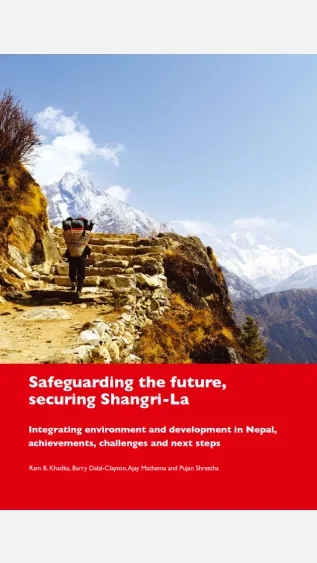
Nepal has abundant natural assets which underpin the economy and a very diverse ethnic and cultural heritage. These provide a strong platform for sustainable development. But the country suffers from the pervasive degradation of its environment and there is widespread poverty. As Nepal emerges from a period of conflict, the opportunity has emerged to safeguard and manage the environment wisely and build the future on a sustainable basis, and in this way secure a transition to a green economy.
This report, produced by leading Nepali thinkers, explores efforts over the past twenty years to mainstreaming the environment in planning and decision-making, and presents case studies which can act as springboards for further action. It also examines the drivers and challenges to such mainstreaming and makes recommendations for further action. The evidence presented makes a compelling case for change and investing in the environment.

The overriding challenge for many European governments today is to reduce major fiscal deficits with the least collateral damage to the economy. This report shows that carbon fiscal measures may raise significant revenues while having a less detrimental macro-economic impact than other tax options. This gives them an important potential role in fiscal policy; a role that is currently widely overlooked. This benefit arising from carbon fiscal measures goes beyond the usual arguments in their favour – namely that they are crucial, cost effective instruments to reduce Europe’s greenhouse gas emissions. The main focus of this report has been on the immediate opportunities for carbon pricing to assist with deficit reduction. In addition to this, the report explores whether there may also be longer term opportunities to raise greater revenue from carbon pricing while improving the efficiency and effectiveness of the EU ETS.
This report was commissioned by the Deutsche Gesellschaft für Technische Zusammenarbeit (GTZ) GmbH and written by Green Budget Germany. Its objective is to present an analysis of economic instruments in use in selected OECD and Latin American countries in the areas of waste prevention and integrated municipal and commercial waste management. Economic instruments identified in the countries of the case sample are: municipal waste charges, landfill taxes, landfill permit trading schemes, deposit-refund schemes and Advanced Recycling Fees.