

Climate change is an unprecedented challenge facing humanity today, one that requires a quick and concerted response. With this context in mind, a rapid scale up in the deployment of renewable or sustainable energy sources is essential in order to reduce the emissions responsible for global warming. In this paper, Gary Hufbauer and Jisun Kim examine the conditions necessary for achieving a credible, low cost alternative to fossil fuel-based energy, placing an emphasis on how trade policy can be used to spur development in the sector, and the key issues that need to be addressed in order to accomplish a sustainable energy trade agreement (SETA). This publication is a joint effort by ICTSD, the Global Green Growth Institute (GGI) and the Peterson Institute for International Economics (PIIE).
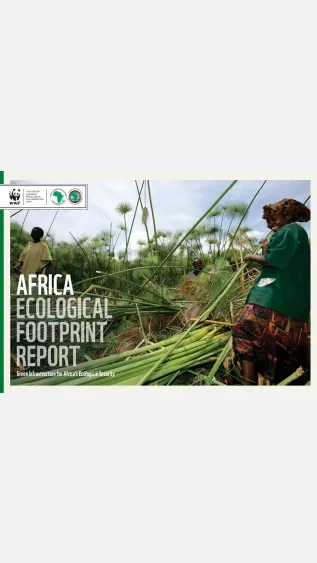
The "Africa Ecological Footprint Report : Green Infrastructure for Africa's Ecological Security" takes stock of the health of Africa’s ecosystems, as well as trends in resources use patterns. It also lays out recommendations on implementing green development pathways for Africa . The report highlights a steep decline in biodiversity in Africa: 40% in 40 years. This decline reflects a degradation of the natural systems upon which Africa’s current and future prosperity depends. In addition, rapid population growth and increasing prosperity are changing consumption patterns, with the result that Africa’s ecological footprint—the area needed to generate the resources consumed by a given group or activity – has been growing steadily. Africa's total ecological footprint is set to double by 2040. Continuing on a business-as-usual scenario means jeapordizing the natural systems on which lives and economies depend. Yet Africa is in an advantageous position to act. This report showcases successful initiatives across Africa as solutions to be up-scaled in areas such as renewable energy, integrated water resource management, ecotourism, and forest conservation.
With rapid urbanization and industrialization, China is now facing a great challenge in meeting the soaring demand for new buildings and the corresponding energy consumption. Under such circumstances, the setting of a national standard on green buildings would be an effective way to respond. In fact, China has made significant progress in developing national green building standards. But such progress is not explicitly released to the international societies. Therefore, the aim of this paper is to introduce such progress. China's green building efforts are first discussed in detail with the various provisions of the national indicator system. By conducting a comparison with other countries' green building standards, a critical analysis of such a national standard is presented. The comparison indicates benefits to be gained and challenges to be met, such as lack of indicators on responding climate change, lack of region-specific indicators, lack of quantitative indicators, higher costs for receiving certification and lack of applying innovative green technologies. So, substantive revision is critically needed.
In order to harness opportunities afforded by an inclusive green economy approach, UNDP supports an array of nationally-defined development activities, applying corporate best practices incorporating environmental, governance, poverty reduction, capacity development, and gender perspectives. UNDP looks at its operations which have as many as possible of the following characteristics:
• emphasize the efficient and sustainable use of natural resources in a low-carbon pathway
• decrease (or protect against) environmental risks, emissions and pollution
• lead to increased income opportunities and/or employment generation
• lead to greater social equity and inclusion.
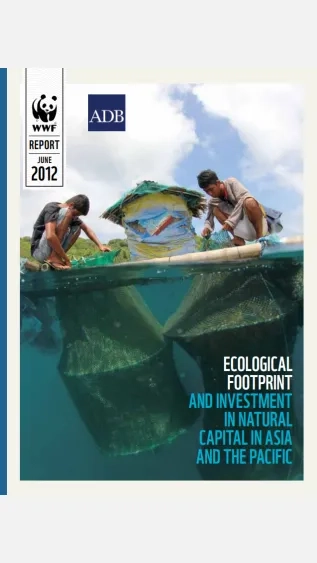
The widespread loss of natural ecosystems and biodiversity is much more than a conservation issue. Natural ecosystems provide socially and economically valuable services, such as food and fiber resources, clean water and climate regulation, that are fundamental to human welfare, but are often overlooked in decision-making processes.
Produced through a partnership between ADB and WWF International, this report provides examples of promising approaches for sustainably managing natural capital in the region. These are based on experiences from four important regional cooperation initiatives, which demonstrate the commitment of the participating governments to protecting the integrity of natural ecosystems while improving livelihoods and reducing poverty.
This report outlines a range of systemic interrelated measures for a progressive transformation towards low-energy, low-carbon, highly resilient and ultimately climate neutral cities. Its recommendations fall under four main headings, with coordination through a well managed city-level framework being perhaps the most essential ingredient for success.
1) Waste management: Options and criteria for recycling, the production of biofuels and incineration.
2) Low-carbon mobility: Disincentives for using cars, along with the promotion of non-motorised and good public transport, and the introduction of alternative fuels infrastructure.
3) Urban energy infrastructure: Incentives to stimulate increased use of renewable energy, and promote energy-efficient technologies and intelligent electric grid systems for city facilities.
4) Urban form and green spaces: Techniques to reduce and prevent sprawl, while preserving and expanding green and open spaces, mitigating the urban heat island effect.