

A number of studies for industrialised countries assess how a transition to a sustainable, low-carbon economy might affect employment. These typically find overall job gains compared to “business-as-usual” scenarios. The more detailed of these studies address not just changes in the total number of jobs, but also underlying job movements as well as the quality of jobs. Such knowledge is vital to informing policies that enable a just transition to a green economy, yet there are few comparable studies for developing countries. A key bottleneck is the scarcity of information, particularly employment and production data on green jobs as well as on linkages with the rest of the economy. As part of the ILO’s Global Green Jobs Programme, this guide provides practical solutions tailored to the considerations of developing countries that can help fill these information gaps. The guide adopts a menu approach, providing policy-makers with a range of options that take into account time and resource constraints as well as policy priorities.
The Green Growth Strategy, outlined in this book, provides concrete recommendations and measurement tools to support countries’ efforts to achieve economic growth and development, while at the same time ensure that natural assets continue to provide the ecosystem services on which our well being relies. The strategy proposes a flexible policy framework that can be tailored to different country circumstances and stages of development.
The "Guidelines for developing eco-efficient and socially inclusive infrastructure" provide practical tools for city planners and decision makers to reform urban planning and infrastructure design according to the principles of eco-efficiency and social inclusiveness. The guidelines build on knowledge accrued and lessons learned though case studies and pilot projects conducted in cities across Asia and Latin America. It is based on the recognized need for an urgent shift in the way urban infrastructure is planned, designed and managed in order to respond to the challenges posed by rapid urbanization, globalization and climate change. The guidelines contain sections on: the importance of building urban infrastructure in an eco-efficient and inclusive way; what strategies planners can use to facilitate eco-efficient and inclusive outcomes; how they should be integrated in a strategic planning cycle; and who is making the change based on best practices examples from Singapore, Republic of Korea, Sri Lanka, Colombia, Philippines, Japan, Tajikistan and Chile.
This paper aims to present a snapshot of some of the best practices in the promotion and use of renewable energy and provide practical examples of the development of renewable energy markets that countries in Latin America and the Caribbean can replicate. It examines current and potential renewable energy markets in Latin America and the Caribbean, economic development benefits of expanding renewable energy markets, policy tools and mechanisms that have been used to build and promote renewable energy in the United States, as well as the role of governments and the private sector.
This summary was prepared by Eldis.
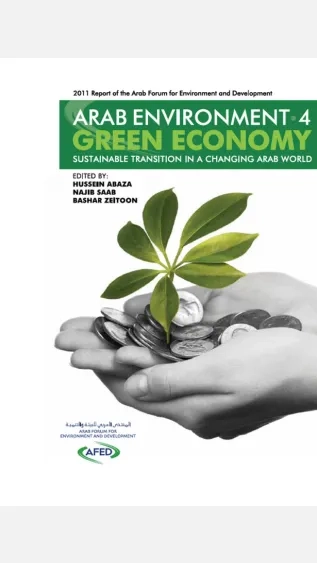
The report contributes to the ongoing dialogue on the future of green economy and catalyzes institutional reforms leading to determined action for sustainable economic policies in Arab countries.
These publications by the International Chamber of Commerce (ICC) set out the ICC’s proposed roadmap for the green economy based on 10 conditions that are needed to drive growth in a resource‐constrained world with strong demographic growth. The ICC represents hundreds of thousands of companies in over 120 countries. Some of the key conditions are: