

Launched at Global Roundtable on 19-20 October 2011 in Washington DC, the UNEP FI Guide to Banking and Sustainability provides a clause-by-clause explanation of the UNEP Statement of Commitment by Financial Institutions on Sustainable Development, seeking both to shed further light on the meaning of individual clauses, and to provide guidance on how banking institutions might seek to apply them in their day-to-day operations. The Guide further provides illustrations of current practice within UNEP FI Signatory banks, and references to key resources.
The tool results from consultations with a variety of UNEP FI members from the banking sector, who have identified a range of uses to the Guide, from Board level to operations:
How can Africa’s vast natural resources create more wealth for the African people in a more resource-efficient and beneficial manner? What are the pathways to industrial growth which can create greater employment, produce higher outputs with lower inputs, and enhance competitiveness for African economies? How can vulnerabilities created by climate change, desertification and external shocks in the world economy be tempered, if not eliminated? What challenges will African countries face in the transition to a green economy and how could such challenges be overcome? What experiences within and outside Africa offer lessons that could be built upon?
These are questions that this report seeks to address. The report is meant to stimulate further discussion, aiming to contribute to articulating African views and perspectives on the theme of green economy in the context of sustainable development and poverty eradication for the United Nations Conference on Sustainable Development (Rio+20) in 2012.
The need for environmentally sustainable modes of production and a more efficient use of resources i.e. Green Industry, is becoming increasingly evident. This is especially so in the developing world, which has the unique opportunity of avoiding the environmental pitfalls that the developed world has fallen into in the course of its industrial development; it can use past experience to build a Green Industrial infrastructure at the very outset. This paper provides an insight into how an increased focus on Green Industry for sustainable industrial development in developing and transition countries can contribute to the attainment of global Sustainable Development (SD) objectives. The paper seeks to elaborate on the need for and value of approaches that target industry specifically, and to promote a more equitable access to the knowledge, technologies and production processes that are needed in developing and transition countries, in order to achieve SD there and elsewhere.
This volume examines the experiences of 21 developed and developing countries in adjusting their training provision to meet the new demands of a greener economy. Analysts started by identifying the drivers of transformation to a greener economy – changes in the physical environment itself and changes induced by government regulations, more efficient technologies and changes in consumer demand. Then they assessed the effect of these changes on employment, identifying areas of job growth and of job loss
Only then could researchers start to understand how skill requirements are changing and are expected to change in the future, and to examine how well national training systems are anticipating and responding to these new needs. Their analysis shows that skills development is critical to unlocking the employment potential of green growth, yet skills shortages are becoming an obstacle in realising this potential. The report recommends that countries devise strategies based on well-informed policy decisions, social dialogue, and coordination among ministries and between employers and training providers.
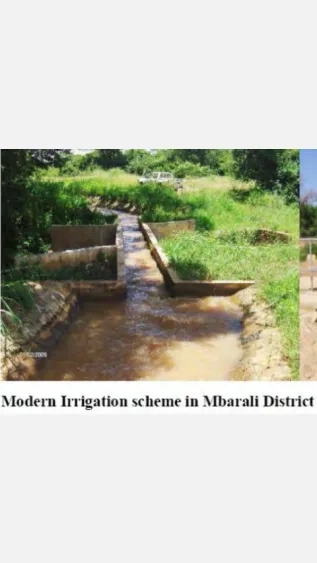
The study assessed the economic value of wetlands linked to community welfare and livelihoods. The study applied partial valuation techniques, socio-economic surveys, and literature reviews to identify livelihood activities supported by natural resources in Ihefu and levels of dependence on these resources.
This Public Environmental Expenditure Review (PEER) covers the first two financial years of the 10th Five Year Plan (FYP) (2008/09 and 2009/2010) and also draws on the experience from the 2009 PEER covering the 9th FYP. The PEER, therefore, provides a basis for the Royal Government of Bhutan (RGoB) to determine how the public expenditures are reflecting the development objectives for the environment and natural resources.