
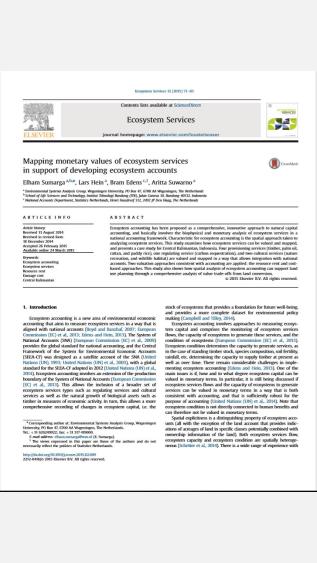
This study examines how ecosystem services can be valued and mapped and presents a case study for Central Kalimantan, Indonesia.

In recent years there has been increasing support for establishing successful models of REDD+ and low emissions development (LED) efforts at a jurisdictional scale. Jurisdictional efforts were designed to overcome the shortcomings of project-based approaches by working across land-use types and with multiple stakeholders to create models for national implementation. This study analyzes some of the most advanced REDD+/LED initiatives worldwide - including a critical look at the success and challenges to date - to understand what is needed to succeed going forward. Eight diverse jurisdictions were studied: Acre, Brazil; Berau, Indonesia; Ghana’s cocoa ecoregion; Mai Ndombe, Democratic Republic of the Congo (DRC); San Martín, Peru; São Félix do Xingu, Brazil; the Terai Arc, Nepal; and the Yucatan Peninsula, Mexico.
From 29-30 January 2015, Ca' Foscari University of Venice, The Energy and Resources Institute (TERI) and the United Nations Environment Programme (UNEP) hosted the GGKP's Third Annual Conference on the theme of "Fis
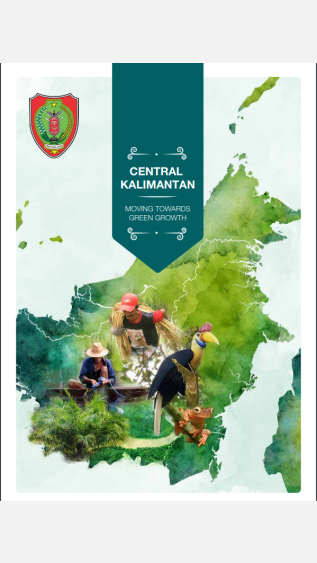
This report, Central Kalimantan: Moving towards green growth, explores Central Kalimantan’s recent planning and regulatory efforts in key economic sectors—as well as cross-sectoral efforts—in order to identify ways in which these are contributing towards Green Growth.
This paper presents a framework for a green economy transition in tourism destinations. While the literature has suggested many models to guide sustainable tourism, very few studies have investigated the green economy in a tourism context. The main distinguishing factor between the green economy and sustainable development may be described as the acknowledgement of climate change as an existential threat to society and the aim to avoid policy, management and governance fragmentation (which has been common for environmental issues) by addressing greenhouse gas emissions, resource efficiency and social inclusiveness holistically at the economic level. This study frames the green economy concept from a tourism perspective and presents a model for translating the green economy concept into a tourism stakeholder engagement process. The model was tested in the case study of Bali, Indonesia, involving research methods such as visioning group techniques with tourism stakeholders, tourism economy and employment forecasting, resource efficiency estimates as well as resident and visitor surveys.