
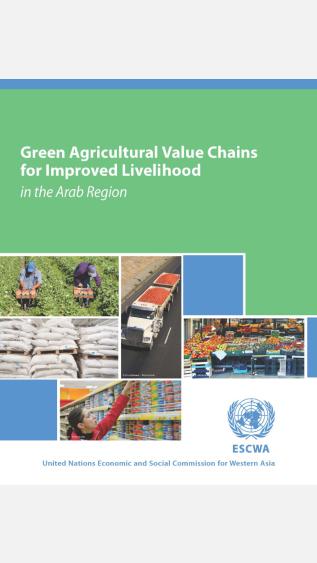
This report aims at informing and supporting the development of a competitive agriculture and food sector in the Arab region, through a review and analysis of agricultural and food value chains.
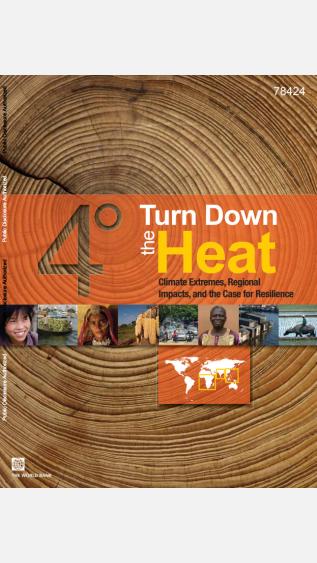
This report focuses on the risks of climate change to development in Sub-Saharan Africa, South East Asia and South Asia. Building on the 2012 report, Turn Down the Heat: Why a 4°C Warmer World Must be Avoided, this new scientific analysis examines the likely impacts of present day, 2°C and 4°C warming on agricultural production, water resources, and coastal vulnerability for affected populations. It finds many significant climate and development impacts are already being felt in some regions, and in some cases multiple threats of increasing extreme heat waves, sea level rise, more severe storms, droughts and floods are expected to have further severe negative implications for the poorest. Climate related extreme events could push households below the poverty trap threshold. High temperature extremes appear likely to affect yields of rice, wheat, maize and other important crops, adversely affecting food security. Promoting economic growth and the eradication of poverty and inequality will thus be an increasingly challenging task under future climate change.
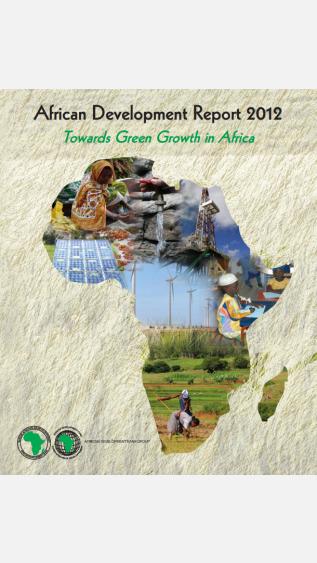
The Report shows that greening solutions not only result in environmental benefits, but also contribute to the economic development of Africa and meet social needs.

This report on inclusive green growth by infoDev and the World Bank reveals valuable insights from community outreach workshops conducted in South African townships for the Climate Innovation Center (CIC) in South Africa. The report does not present a one-size-fits-all solution to implement inclusive green growth strategies across all developing countries. The reports findings are observed in light of the Gauteng Climate Innovation Centre, which aims to facilitate and foster innovative clean technology entrepreneurship within the context of the surrounding township communities.
Africa has a huge untapped potential for generating clean energy, including enough hydroelectric power from its seven major river systems to serve the whole continent’s energy needs, as well as great potential for solar energy, wind energy, geothermal energy etc. Although major hurdles exist also in the distribution of energy, this paper argues that there is potential for Africa to leapfrog existing fossil fuel energy sources and exploit clean energy from the outset to meet its developing needs. The report focuses on the patent landscape for clean energy technologies (CET) in the continent, as a specific geographical area which could greatly benefit from their use and technology transfer in this area. The study provides facts and evidence to evaluate the actual situation concerning patenting of CET in Africa. It helps to understand how the global and African patent systems can best be used and further developed to support and facilitate the technology transfer of CETs in Africa.
This summary was prepared by Eldis.
This paper addresses the issues of urbanisation and green growth in Africa from the perspective of what it would take for African cities and countries to accommodate the upcoming urban explosion without the usual negative impact on the physical environment, and using it as an opportunity for innovative and green growth. The paper is organised in four parts. Part I reviews the performance of the African region, economic growth, urban expansion and the characteristics of the urbanisation process. Part II suggests a framework to discuss green growth at city level. It focuses on sectors normally under city responsibility (land, buildings, waste, urban transport) and reviews the use of public policies, including regulation, pricing, tax and investment criteria. Part III discusses combinations of policies for African cities at different stages of urbanisation and urban growth. Part IV summarises the key points for a forward-looking policy agenda. The reports draws on literature produced on Green Economy by UNEP, the World Bank, OECD, African Development Bank and provides relevant examples from Africa and cities in the world.