
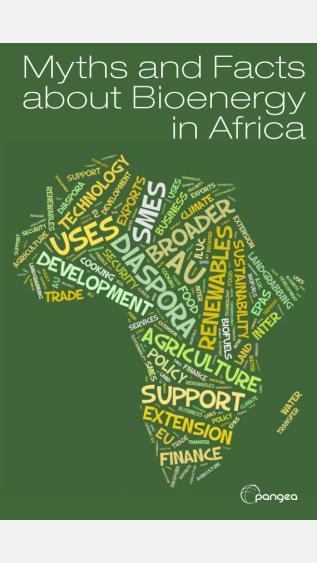
This publication Myths and Facts about Bioenergy in Africa presents facts about bioenergy in sub-Saharan Africa while addressing false assumptions that are often claimed against this sector.
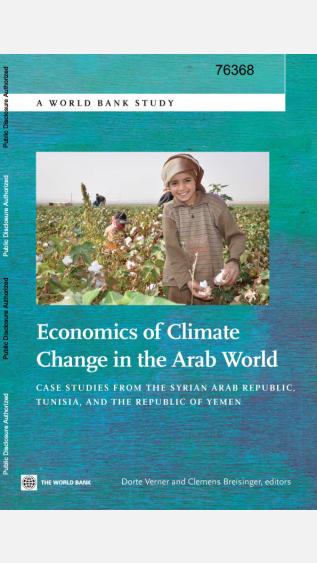
This report assesses how severely climate change will affect the three countries and stresses the necessity of considering the impacts of climate change in future development strategies.

This paper describes how Africa’s wind energy markets have evolved over the years and the structural characteristics affecting the development of wind energy projects on the continent; providing what we believe is the first mapping of the continent’s wind energy market. Results from an analysis of 94 projects on the continent suggest that wind energy markets remain small, concentrated and nascent in nature. While an increasing trend in the number and size of projects being implemented has been observed, the papers shows that wind energy contribution to the energy mix in Africa will remain unchanged over the long term. A key observation in the paper is that wind energy has limited potential to address the issue of access to electricity in Africa mainly due to the intermittent nature of electricity output from wind power plants.
This case study evaluates the current and potential social and economic value of Virunga National Park, which is located in the eastern part of the Democratic Republic of the Congo (DRC).
This article examines the potential contribution of household scale off-grid renewable energy generation to the post-carbon economy. The large-scale focus of the green jobs agenda in high-income countries obscures how small-scale technologies can be a transformative source of employment in developing economies. Debates about what constitutes a green job and their value leaves out the everyday practice of green livelihoods carried out by the urban poor across the African continent in unfavourable institutional contexts where nonrenewable fuel is subsidised and renewable energy inputs are heavily taxed. The article presents experiences from field work in several countries, including Egypt, Nigeria and Kenya to provide practical examples of communities pursuing strategies of income generation, community empowerment and environmental preservation. It argues that scholars and practitioners concerned with both social justice and environmental preservation should embrace a definition of green jobs that is bottom-up or people-centred.
La présente étude porte sur la revue des dépense publiques environnementales, sous les aspects de leur volume alloué, eu égard à l’ampleur des problèmes à résoudre ou des besoins à satisfaire, de leur efficacité mesurée en termes de réalisations d’objectifs poursuivis, de leur efficience sous l’angle de la rationalisation des coûts dans la réalisation des objectifs.