

This paper explores the high dependency of a number of countries of the Southern African Development Community (SADC) on mineral resources, and the relative lack of expected social benefits from the extractive industries sector in these countries. The brief finds opportunities for greener and inclusive growth by linking extractive industries to other development goals beyond economic returns, as well as by integrating environmental concerns more broadly into economic development plans.
Africa is well endowed with potential for hydro and solar power, but its other endowments – shortages of capital, skills, and governance capacity – make most of the green options relatively expensive, while its abundance of hydro-carbons makes fossil fuels relatively cheap. Current power shortages make expansion of power capacity a priority. Africa's endowments, and the consequent scarcities and relative prices, are not immutable and can be changed to bring opportunity costs in Africa closer to those in the rest of the world. The international community can support by increasing Africa's supply of the scarce factors of capital, skills, and governance.
This article appeared in the Energy Economics Supplemental Issue: Green Perspectives.
This report summarises the outcomes of the joint AfDB-OECD workshop, titled Enabling Green Growth in Africa, hosted by the Government of Zambia in Lusaka on January 15-16, 2013 and another two-day workshop on Strategic Environmental Assessments (SEA) and Green Economy that follows, organised by the OECD DAC SEA Task Team. The objective of the workshops was to facilitate an exchange of perspectives between regional member countries (RMCs) and development partners; and to explore the rationale and enabling environment for green growth in Africa through, notably, the sharing of country experiences. The report highlights how the outcomes of the two workshops will inform current and future green growth work in both organisations.
This paper presents comparative data on innovation in selected climate change mitigation and adaptation technologies in the context of Africa. Such analysis informs policy aimed at encouraging international technology transfer and development of domestic innovation capacities. The authors present detailed analysis of the role of Africa in development of these technologies (invention), and then move on to examine Africa as a technology market (as reflected in patenting). In addition, the authors briefly touch upon the question of cross-border technology development (co-invention) in Africa. Despite Africa’s generally low volume of inventive activity in these fields in comparison with other countries, inventive activity is disproportionately directed towards mitigation and adaptation technologies. In addition, the rate of international co-invention for most mitigation and adaptation technologies is much higher in Africa than in the rest of the world. And finally, rates of protection of climate technologies at African intellectual property offices are high relative to other technologies.
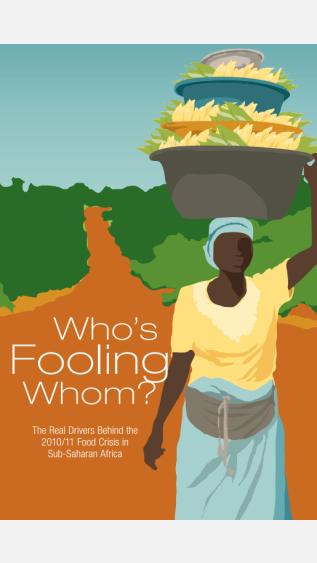
The purpose of this report is to examine the link between global demand for biofuels and the 2010/11 food crisis in the Sub-Saharan African region, and to understand to what extent the former has influenced the latter.
Many protected areas are not successfully conserving biodiversity, often despite adequate management within their borders. Changes in land use outside protected areas can alter ecological function inside protected areas and result in biodiversity loss given that protected areas are almost always parts of larger ecosystems. Economic incentives are seen as one of the most promising avenues to influence conservation goals. This paper deals with enabling these in the now commonly accepted notion of bioregional landscape management. It suggests a holistic framework to help understand where and how such incentives may function. It then discusses a range of desired incentives, and relate as many of these as possible to potential underlying institutional changes. Without going into country-specific details, several southern African examples are used, all the while relating both principles and examples to bioregionalism. We conclude that incentives for bioregional conservation in southern Africa are far more likely to succeed if key institutions can be introduced.