

This book is organised as follows: the first chapter examines the pattern of structural transformation in Middle East and North Africa, or MENA and summarises the role of various factors examined thoroughly in the rest of the volume. The second chapter examines the correlates of this overall disappointing performance. At the macro level, MENA countries have been unable to maintain depreciated (undervalued) real exchange rates for long periods, yet such undervaluation has proved important to offset the market failures and poor institutional environment that severely hit the dynamic non-resource-intensive traded sectors.
This report defines the scope of the environmental sector and provides a detailed methodology based on which data has been collected, analyzed, and reported. Also, it gives a comprehensive analysis of the preliminary findings of both quantitative and qualitative data, including macroeconomic performance, policy and legal frameworks, methodology, and preliminary assessment of the Public Environmental Expenditure Review (PEER).
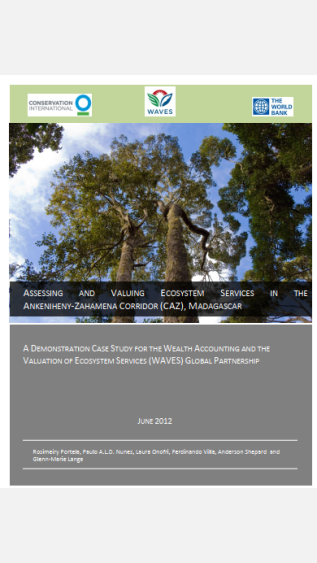
Conducted as a demonstration study for Wealth Accounting and the Valuation of Ecosystem Services (WAVES) in Madagascar, this analysis provides an in-depth assessment of the contribution of key ecosystem services from the Ankeniheny-Zahamena Forestry Corridor (CAZ), the largest remaining contiguous patch of humid forest in eastern Madagascar.
The Tourism Background Report is an extended version of the Tourism Chapter of the “Green Economy Report” (GER), which makes the case for investments in greener and sustainable tourism as a means to create jobs and reduce poverty while also improving environmental outcomes. The Report analyzes the main variables that influence tourism development and aims to demonstrate that concerted “greener” policies can steer the growth of the sector toward a more sustainable path.
This paper explores the value of green growth from the perspective of sustainable development practitioners. First, it provides a brief definition of green growth, and why the concept is relevant for meeting Africa’s challenges. It then discusses how green growth can be achieved, highlighting some of the primary tools for achieving it, and then discussing focal areas that we believe will have the greatest impacts by spurring growth sustainably. Finally, it discusses how the AfDB has promoted green growth through its own initiatives. Boxes throughout the paper provide examples of the AfDB’s promotion of green growth in its project portfolio.

The publication addresses in detail seven priority areas for the Rio+20 conference: decent jobs, energy, sustainable cities, food security and sustainable agriculture, water, oceans and disaster readiness.