
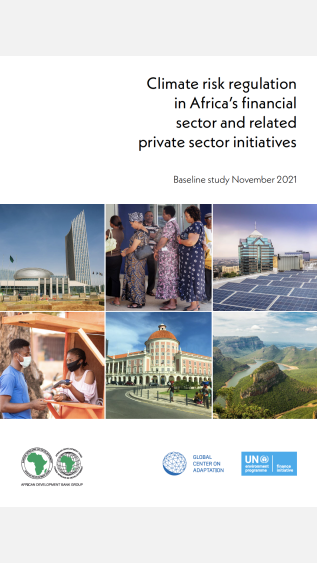
This report highlights the state of climate risk regulation in Africa’s financial sector and presents an analysis of the financial stability architecture and climate risk initiatives in 12 countries.
This report presents the status and trajectory of Nationally Determined Contributions in Africa.

In the run-up to COP26, commitment to net zero targets has been impressive. But there's a growing awareness of the scale of action needed to drive down carbon, and the innovation required to make net zero achievable.

Africa’s textile industry has been experiencing increased growth in recent years, but it has come at an environmental cost due to its huge energy and water demand and use of highly polluting chemicals. Taking a more circular approach, however, provides a paradigm shift that goes beyond the current “take, make and dispose” model and focuses on a more cost-effective and sustainable production process. This was one of the main takeaways of the In Africa for Africa: Weaving solutions for textile circularity challenges workshop organized at the World Resources Forum 2021 on 12 October 2021 by the Green Industry Platform, together with the Global Opportunities for Sustainable Development Goals (GO4SDGs) initiative and United Nations Environment Programme’s EU-funded InTex project.
This report provides an overview of existing adaptation finance flows in Africa and identifies opportunities to increase the volume and efficacy of that finance.
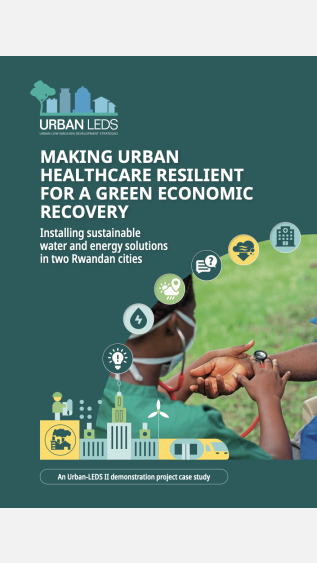
This case study evaluates Rwanda's implementation of Urban Low Emissions Development Strategies (Urban-LEDS II), a global initiative that strengthens climate resilience through low emissions.