
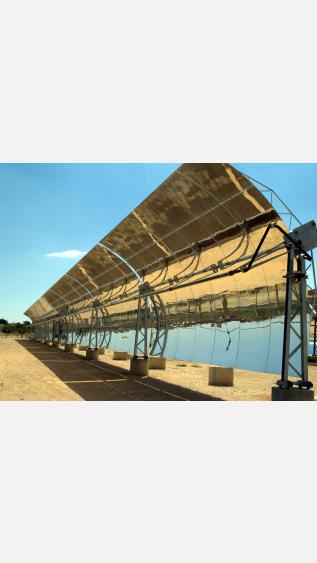
This report from ICCG provides an insight into solar systems, among other renewable sources, high potential to contribute to the MENA region’s future generation needs.

This year, for the first time ever, nearly all of the world’s countries are making pledges to help limit future climate change. As of 1 October 2015, 147 countries (representing about 85% of global emissions) have submitted their Intended Nationally Determined Contributions. These pledges, if carried out in full, are expected to lower emissions relative to the ‘business as usual’ forecast. However, they are not expected to prevent emissions from increasing above today’s level through 2030. To meet the global goal of limiting mean global temperature change to 2°C relative to the pre-industrial level, much more will need to be done after 2030. Eventually, emissions will have to fall to zero worldwide – either that, or countries will need to remove carbon dioxide directly from the atmosphere. This new Vox eBook looks into what needs to be done to build a climate regime that is both workable and effective.
Climate change and climate policies will affect poverty reduction efforts through direct and immediate impacts on the poor and by affecting factors that condition poverty reduction, such as economic growth. This report explores the relation between climate change, climate policies, and poverty outcomes by examining three questions: the (static) impact on poor people's livelihood and well-being; the impact on the risk for non-poor individuals to fall into poverty; and the impact on the ability of poor people to escape poverty. The report explores various channels through which climate change and policies will affect poverty: economic impacts through incomes and prices; natural disasters and their effects on assets and livelihoods; and health impacts. It also investigates policy options to ensure adaptation and mitigation policies -- such as adaptive and well-targeted social protection, public investments, and financial inclusion policies -- contribute to poverty reduction and protect poor people against climate change impacts.
The joint report prepared by the World Bank, UNDP–UNEP Poverty-Environment Initiative and UN Women provides a unique quantification of the costs in terms of lost growth opportunities and an estimate of what societies, economies, and communities would gain if the gender gap in agriculture is addressed.
Land degradation and desertification are among of the world’s greatest environmental challenges. It is estimated that desertification affects about 33 % of the global land surface, and that over the past 40 years erosion has removed nearly one-third of the world’s arable land from production. Africa is particularly vulnerable to land degradation and desertification, and it is the most severely affected region. Desertification affects around 45 % of Africa’s land area, with 55 % of this area at high or very high risk of further degradation.
Renewable energy has been considered as the solution to the hydra-headed problems of energy security, energy access and climate change, especially in Africa. In addition, renewable energy sources, such as the sun, wind, wave and waste abound in Africa are in need of investment. In order to provide both policy and investment guidance, this study investigates the drivers of renewable energy demand in oil-producing African countries. Three panel data models – a random effect model, a fixed effects model and a dynamic panel data model – are used to estimate renewable energy demand with a comprehensive set of determinants. The estimation results indicate that the main drivers of renewable energy in oil-producing African countries are real income per capita, energy resource depletion per capita, carbon emissions per capita and energy prices. The study recommends that policies should encourage the consumption of commercial sources of renewable energy to attract the needed investments.