

The projected quadrupling of global GDP by 2060 presents both tremendous risks and opportunities for the sustainable management of natural capital. Embracing a circular economy model presents great potential for economic growth, with an estimated US$4.5 trillion business opportunity. However, the degradation of natural capital threatens the ecosystem services on which more than 40 percent of total world employment, or 1.2 billion jobs, depend directly, along with billions more jobs with indirect linkages to natural capital. In this blog, we feature some of our latest resources that illustrate the role green industry can play in strengthening the sustainable management of natural capital.
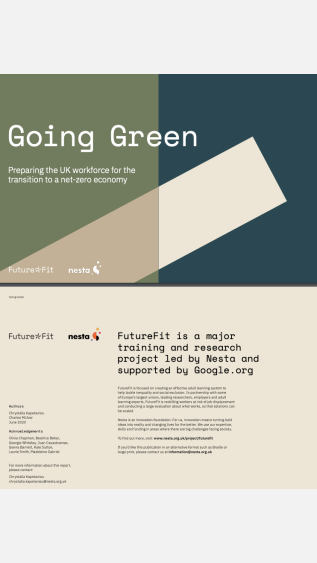
This report provides a thorough examination of the scale of the challenge in the UK regarding employment and adult learning and offers guidance about the actions needed to achieve an efficient, inclusive, and fair transition to a net-zero economy.
This report explores the implications of the transition to low-carbon and resource-efficient economies for skills, gender, and occupations.
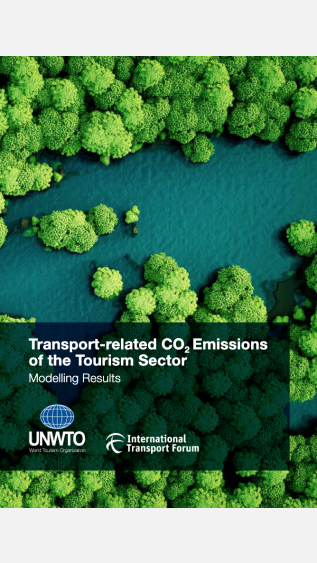
This report provides evidence of the CO2 emissions from tourism and the implications of the different modes of transport. It provides insights into the evolution of tourism demand across the different global regions up to the year 2030. It also presents the expected transport-related CO2 emissions of the tourism sector against the current ambition scenario for the decarbonisation of transport.
On 13 November 4pm CEST, the Global Women's Network for the Energy Transition (GWNET) is hosting a webinar on Renewable Energy: Job opportunities along the value chain.
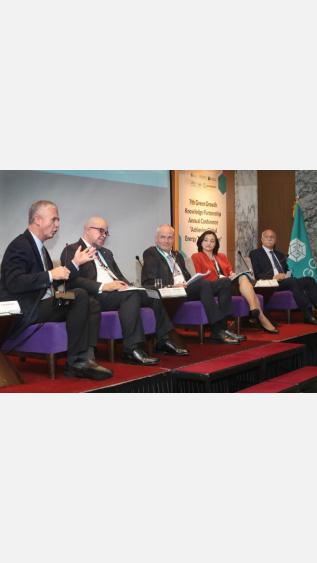
Twenty-eight scientific papers were presented at the GGKP's Seventh Annual Conference (GGKP7), with a focus on scaling up renewable energy solutions. Three high-level panels – with representative from Denmark, the Philippines, Burkina Faso, Papua New Guinea, Colombia, Austria, the United Arab Emirates and elsewhere – spoke on successful approaches on achieving national economic growth and energy security objectives by scaling up clean energy.