

The implementation of climate resilient low-emission development (LED) strategies is essential for ensuring the integrity and performance of LED programs and projects in the face of evolving climate impacts. However, most LED planners do not yet routinely consider the potential impacts of climate change, such as risks associated with extreme weather events or climate trends. Fortunately, in the past several years, a variety of tools have been developed by development partners (e.g., USAID, World Bank, African Development Bank, Inter-American Development Bank) that planners can now use to determine whether and to what extent climate change may impact their investments.

Big data sets and new technologies can be brought together to create new knowledge products that can provide environmental insight in near real-time. Now is the time to reimagine and supercharge environmental governance and public-private partnerships by using big data, frontier technologies and data analytics to target our action and investments.

On 9 April 2019 (7:15-8:15 PM CET), the Security and Sustainability Forum (SSF) is holding a webinar on "Profit from Capturing Methane Emissions."

On 05 April 2019 (15:00 PM CEST) the Euro - Mediterranean Center on Climate Change (CMCC) is holding a webinar on "IMMERSE User Remote Workshop on Interfaces".
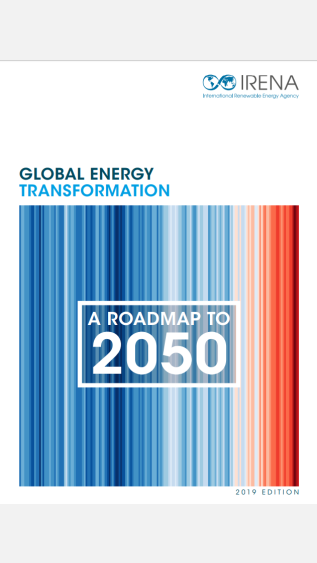
Increased use of renewable energy, combined with intensified electrification, could prove decisive for the world to meet key climate goals by 2050. This study highlights immediately deployable, cost-effective options for countries to fulfill climate commitments and limit the rise of global temperatures.
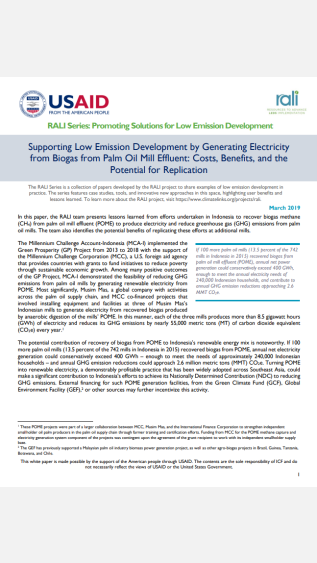
The Millennium Challenge Account-Indonesia was implemented the Green Prosperity Project from 2013 to 2018, with the support of the Millennium Challenge Corporation (MCC). The project demonstrated the feasibility of reducing GHG emissions from palm oil mills by generating renewable electricity from palm oil mill effluent. This paper presents lessons learned from these efforts and identifies the potential benefits of replicating these efforts at additional mills.