
This brief, Innovation Priorities to Transform the Energy System: An overview for policy makers, provides a high-level overview of priorities to accelerate technological and systemic innovation.
As currently constituted, the price of electricity in today's markets does not accurately reflect the costs of electricity on the society and the environment. Adopting approaches suggested in this paper would allow policy makers and the public to make better informed decisions along the path towards fully sustainable electricity systems.
In 2015, the Food and Agriculture Organization of the United Nations (FAO) and the Deutsche Gesellschaft für Internationale Zusammenarbeit (GIZ) GmbH hosted an exploratory workshop to better understand the potential of solar-powered irrigation systems (SPIS) for developing countries.
In 2018, this report was prepared to take stock of the experiences with SPIS around the world. It includes insights on the following questions:
This paper, Circular Consumer Electronics: An initial exploration, offers an initial overview of how the principles of a circular economy could be applied to the electronics industry.
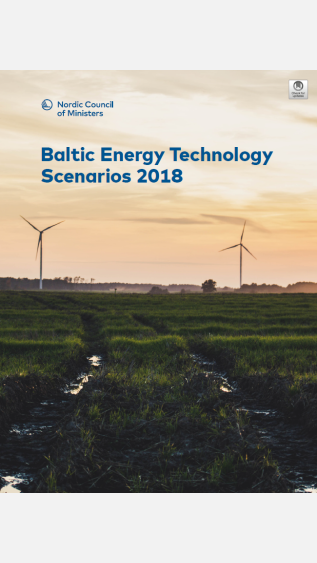
Baltic Energy Technology Scenarios 2018 (BENTE) is a scenario-based energy system analysis that explores the changes in the Baltic countries’ energy systems. What are the drivers and their impacts in the following decades? What would be required for the Baltic countries to meet their climate and energy targets in 2030, and what development would lead the Baltics towards a 2°C pathway?
The report finds that the Baltic countries’ proposed renewable energy (RE) targets can be achieved using domestic resources. More renewable energy (electricity, heat and fuels) lets energy demanding sectors reduce GHG emissions and increase the RE share. However, the Baltic countries still do not reach their Effort Sharing Sector’s 2030 targets in the 4°C Scenario (4DS). Without policies to stimulate local renewable energy generation, the Baltics are likely to become large net importers of electricity.
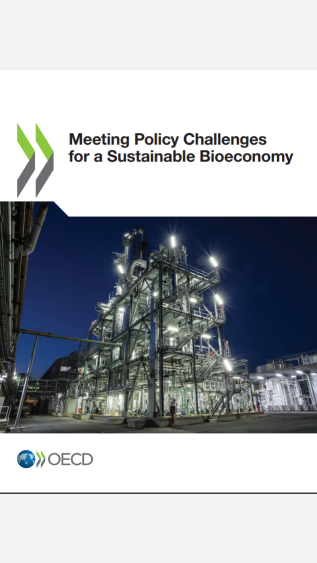
This publication Meeting Policy Challenges for a Sustainable Bioeconomy investigates key aspects surrounding the sustainability of bioeconomy development: the use of biomass as feedstock for future production.