
This report emphasizes the technological aspects relevant to eco-innovation. It describes the role of technology within an eco-innovation approach, provides guidance on identifying, developing, and adopting technologies, informs on the role of policy-making, and highlights the role of business intermediaries.
This report identifies some of these barriers, and specifically those originating from the policies in place that determine the context in which companies operate. It helps policymakers better understand the benefits of eco-innovation and the contribution it can make towards sustainable development and national objectives.
This compendium describes information on commercially available or near commercially available technologies and associated techniques for resource recovery from WEEE/e-waste and subsequent treatment of residual wastes.
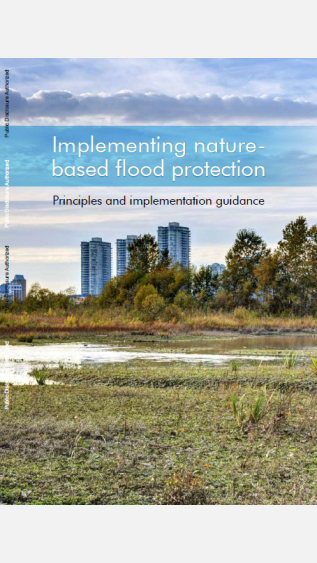
Effective flood risk management is critical to protect people and their livelihoods from flooding and to limit future losses. Nature-based measures and their ability to address flood risk are receiving increasing attention. Until recently, most flood risk management involved conventional engineering measures. These measures are sometimes referred to as “hard” engineering or “gray” infrastructure. Examples include building embankments, dams, levees, and channels to control flooding. Recently the concept of “nature-based solutions”, “ecosystem-base adaptation”, “eco-DRR” or “green infrastructure” has emerged as a good alternative or complement to traditional gray approaches. Nature-based solutions make use of natural processes and ecosystem services for functional purposes, such as decreasing flood risk or improving water quality. The objective of this document is to present five principles and implementation guidance for planning, such as evaluation, design, and implementation of nature-based solutions for flood risk management as an alternative to or complementary to conventional engineering measures.

Are you a city-dweller, concerned about the challenges of urbanisation, resilience and inclusiveness?
Cities and urban areas represent unrivalled concentrations of people, economic growth, commercial networks, and innovation – and have the potential to make a significant contribution to the transition towards a low-carbon world. A starting point would be to explore multi-level governance solutions that allow cities to continue developing in a sustainable manner. But to get there, we must first understand the issues at the core of decision and policy-making between national and subnational levels of government. Tackling the underlying issues is essential to make green growth a reality for all cities, big and small.
The report aims to examining and documenting the role and significance of various enabling measures that could facilitate a smooth transition to an inclusive green economy in Africa, taking into account the implications of such a transition for the region. The measures examined are: policies and institutions, policy instruments, technology development and transfer, capacity development, and financing the transition.
The report (i) Analyses the implications of the transition to an inclusive green economy for Africa; (ii) Explores measures as they relate to the transition, and analyses trends in the application of the measures; (iii) Discusses challenges and opportunities for an inclusive green economy transition in Africa; and (iv) Puts forward policy recommendations that could enhance the adoption of enabling measures relevant for a smooth transition in Africa.