

Innovation, Agricultural Productivity and Sustainability in Turkey is part of the OECD Food and Agricultural Reviews series. This review was prepared in close cooperation with Turkish Government. It examines the policy conditions for businesses in Turkey to undertake innovation for the food and agriculture sector to become more productive and environmentally sustainable.
Over the past decade, India’s cities have been witnessing an increasing trend in motorization with deteriorating air quality, and there have been calls to promote public transport as a way out of this gridlock. It is in this context that electric buses can play a positive role, as there are several benefits associated with the shift from conventional diesel buses to electric buses in terms of reduction in local pollution, noise, and fuel consumption. In spite of the many positive benefits related to the electric bus technology, certain challenges remain. Primary among these are costs and safety concerns. Currently, the Electric Vehicle (EV) technology is associated with significant capital costs, with the battery component constituting about half of the total manufacturing costs. Safety is yet another important parameter, and the biggest concern is that of a fire hazard. However, with a good Battery Management System (BMS), rigorous implementation of standard operating procedures, and customization of the bus fleet, both safety and cost aspects can be effectively addressed.
Guyana Technology Needs Assessment (TNA) project has mitigation and an adaptation component and this TNA report Technology Needs Assessment Report: Identifying and prioritizing mitigation technologies as part of Guyana's technology needs assessment (TNA) project for mitigation is one of the first main deliverables of the TNA project.
Technology Needs Assessment Adaptation: Identification and prioritisation of adaptation technologies for Guyana is first of the three reports at prioritising technologies for adaptation in Guyana. It is the outcome of a stakeholder-driven, participatory process to identify and assess technologies that will contribute to national development goals, strengthen Guyana's adaptive capacity against the negative impacts of climate change and prepare the country to take advantage of opportunities which may occur.
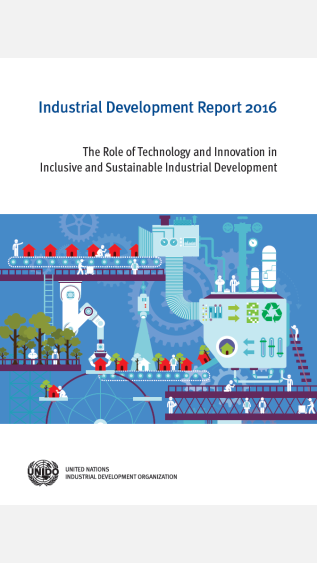
There is a growing body of evidence that environmental regulations can support strong economic performance. This report from Sustainable Prosperity finds that environmental regulation comes with lower compliance costs and greater innovation than previously thought.
In 2014, researchers at the OECD constructed the first comprehensive set of data on environmental strictness and found that “an increase in stringency of environmental policies does not harm productivity growth.” We know this to be true for specific policies as well – the United States SO2 market has led to a greater than expected emissions reduction, at less than half the predicted compliance costs. The same good news story has been seen in Canada – The introduction of British Columbia’s carbon price coincided with a 16% decrease in overall fuel use in its first 5 years, at the same time that the province’s economy grew slightly more quickly than the rest of Canada’s.