

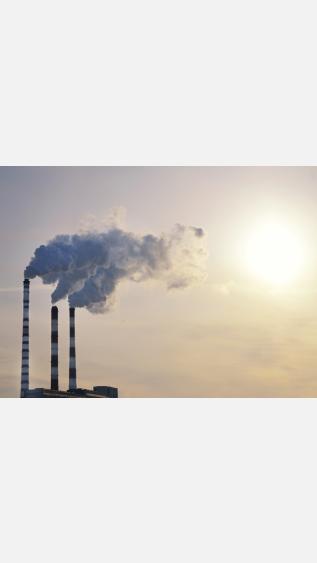
Can small innovating firms drive the energy technological transition? Today, the electricity sector is responsible for 40% of the world’s CO2 emissions, twice as much as the transport sector. This is mainly due to the fact that 70% of electricity is still mostly produced from burning highly carbon-intensive fossil-fuels, such as oil, coal and gas. Transforming our energy system will require speeding up the rate of innovation in renewable technologies, so that they can compete with fossil-fuel technologies. New research sheds light on the central role of small innovating firms specialized in renewable technologies in moving our energy systems away from fossil-fuels.


Ryan Parmenter, OECD, discusses how innovative technologies to improve productivity and performance could be developed using a systems approach in order to enable the next industrial revolution for green growth.
The GGKP released a series of six working papers on "Fiscal Policies and the Green Economy Transition". The papers cover a range of fiscal topics important to informing the transition to a green economy, such as fiscal reform, water security, environmental taxation in transport, low-carbon technology innovation and more.

Laura Diaz Anadon, discusses in a Q&A with the GGKP, recent interdisciplinary research that highlights new insights on the impacts of various policies on advancing energy innovation.
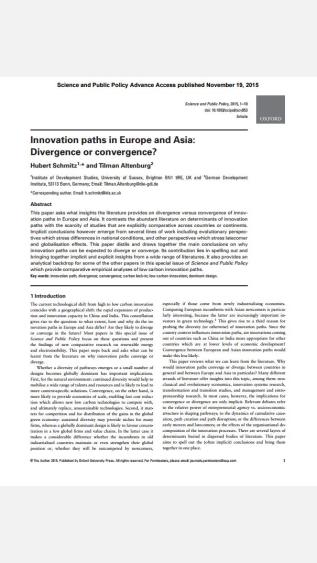
This paper asks what insights the literature provides on divergence versus convergence of innovation paths in Europe and Asia. It contrasts the abundant literature on determinants of innovation paths with the scarcity of studies that are explicitly comparative across countries or continents. Implicit conclusions however emerge from several lines of work including evolutionary perspectives which stress differences in national conditions, and other perspectives which stress latecomer and globalisation effects. This paper distils and draws together the main conclusions on why innovation paths can be expected to diverge or converge. Its contribution lies in spelling out and bringing together implicit and explicit insights from a wide range of literatures. It also provides an analytical backdrop for some of the other papers in this special issue of Science and Public Policy which provide comparative empirical analyses of low carbon innovation paths.
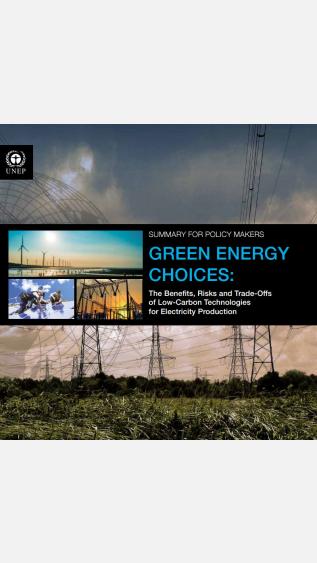
Rising energy demand and efforts to address climate change require a significant increase in low-carbon electricity generation. Yet, concern has been raised that rapid investment in some novel technologies could cause a new set of environmental problems.
This is a summary of the key findings of the International Resource Panel (IRP) report Green Energy Choices: The Benefits, Risks and Trade-Offs of Low-Carbon Technologies for Electricity Production which aims to support policy-makers in making choices about the technologies, infrastructures and energy sources. It does so through an analysis of the mainstream commercially available renewable and non-renewable power generation technologies3, analysing their GHG mitigation potential, but also tradeoffs in terms of: Environmental impacts (impacts on ecosystems, eutrophication and acidification, etc.) Human health impacts (particulates and toxicity) Resource use implications (iron, copper, aluminium, cement, energy, water and land).