

The aim of this paper is to provide a critical review of the literature on the econometric analyses of firm-level determinants to eco-innovation. The review reveals some gaps in knowledge. First, an integrated theoretical framework which merges the insights from different approaches is missing. Second, the influence of some variables is still unsettled (demand-pull and cost-savings), whereas others have hardly been included in previous analyses (internal and international factors). Third, studies on the drivers to eco-innovation versus general innovation are relatively scarce with respect to those on the drivers to eco-innovation in general. Fourth, analyses of the relevance of different determinants to eco-innovation for distinct eco-innovator and eco-innovation types have largely been missing. Fifth, studies on middle-income and developing countries are still scarce. Sixth, the econometric analyses have relied on microeconometric methods based on cross-section data (mostly logit and probit models), whereas the use of panel data is virtually absent.
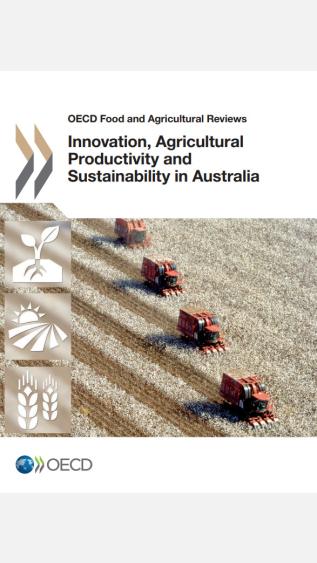
This review Innovation, Agricultural Productivity and Sustainability in Australia examines Australia’s policy conditions surrounding business and allowing innovation in the agriculture and food sectors for increased productivity and environmental sustainability.
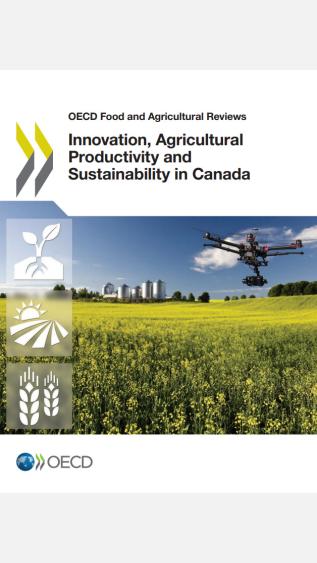
The review Innovation, Agricultural Productivity and Sustainability in Canada examines the conditions surrounding innovation in the food and agriculture sector business and allowing for increased productivity and environmental sustainability.
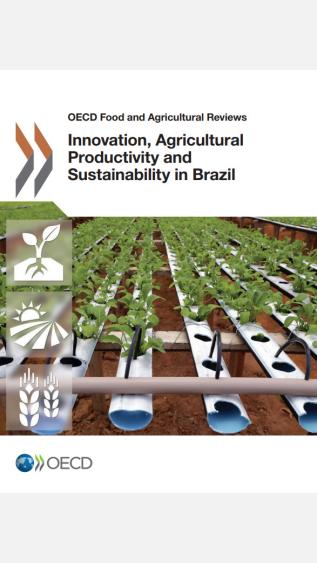
Agriculture and the agro-processing sector in Brazil have shown impressive growth over the past two decades. This has largely been driven by productivity improvements and structural adjustment resulting from broad economic reforms, as well as new technologies developed by agricultural science. Government policy and industry initiatives are increasingly focused on the sustainability of agricultural development.
Eco-innovation has been identified as one of the key drivers of change that need to be harnessed for a sustainable future. Given the complexity of eco-innovation as a concept, there are various challenges to measuring its progress. This CEPS Working Document briefly explores the evolution of the concept of eco-innovation and emphasises its role in the EU 2020 strategy. It then gives an overview of the different measurement approaches and challenges associated with identifying and using indicators for measuring progress in eco-innovation. Within this context, the paper describes the added value and key features of the www.measuring-progress.eu web tool, which aims to improve the way in which policy-makers and others involved in the policy process can access, understand and use green economy and eco-innovation indicators. The web tool was developed as part of a systematic overview by the NETGREEN project research team of the large and fragmented body of work in the field of green economy indicators. The paper concludes with a number of messages for policy-makers in this field.
Eco-innovation globally emerged as an effort to implement sustainable development. States and firms established and implemented policies and strategies for eco-innovation as one route to achieving sustainable development. Eco-innovation has been facilitated in developed countries, specifically OECD members and European countries, through action plans. Recently, eco-innovation policies have emerged in developing countries. Thus, this study analyzes eco-innovation policies in Asian countries. Policies related to eco-innovation in 17 Asian countries were investigated using policy instrument categories. National policies for eco-innovation were interpreted and compared with development stage classifications. The results indicate that there are similar and different policy approaches to eco-innovation in Asian countries. Given the balance between a technology push (supply side) and a market pull (demand side) in policy instruments for eco-innovation, 17 countries were identified by four categories: leaders, followers, loungers, and laggards. The results provide insight for designing national strategies for eco-innovation in Asia’s developing countries.