
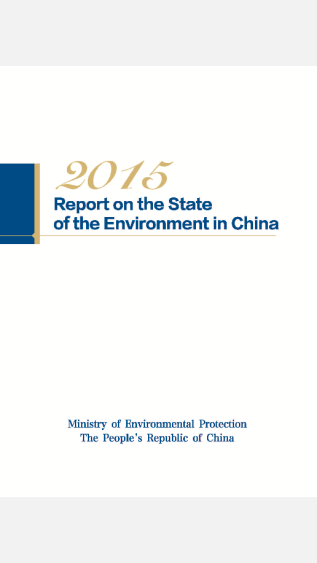
2015 Report on the State of the Environment in China gives a summary of environmental protection status in China. It provides information on atmospheric, freshwater, marine, forest, acoustic, radiation, grassland, and natural and ecological environment. The current state of the energy and transport sector is also included in this report.
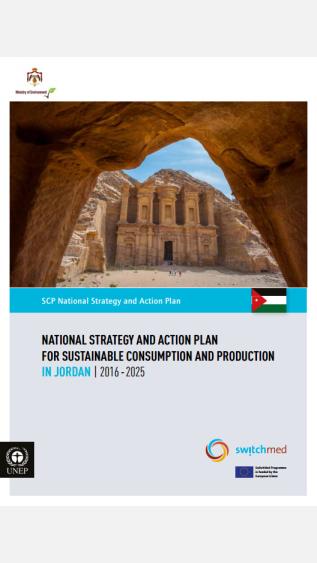
This resource is also available in Arabic.
The National Strategy and Action Plan for Mainstreaming Sustainable Consumption and Production into Agriculture/Food Production, Transport, and Waste Management Sectors in the Hashemite Kingdom of Jordan (2016-2025) aims at supporting the implementation of agreed on SCP strategic, operational objectives and actions at the national level. This document has been prepared in line with the regional SCP Action Plan for the Mediterranean, in cooperation with the SWITCH-Med Programme and financed by the European Union to support SCP common objectives in the region. Jordan’s SCP Strategy and National Action Plan (NAP) addresses key human activities, which have a particular impact on the Jordanian environment including marine and coastal areas and related transversal and crosscutting issues. It defines common objectives and identifies actions guiding the implementation of the SCP at the national level.
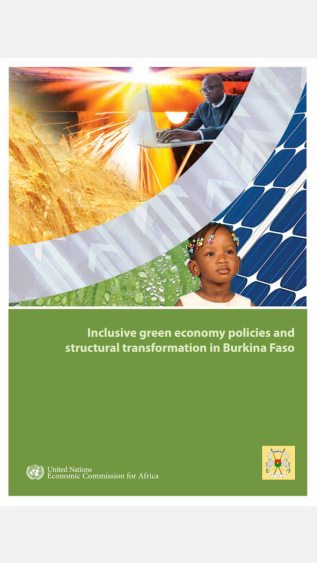
In Burkina Faso, more effective macroeconomic management based on policies to promote sustained and sustainable growth remains a priority goal. However, it is now recognized that maintaining rapid growth is not synonymous with structural transformation or a rapid reduction in poverty. To achieve the above-mentioned goals, growth must be deliberately oriented towards sustainable, inclusive development, predicated in particular on a process of agricultural modernization, industrialization tailored to national circumstances and economic diversification which creates jobs, helps to lower poverty levels and gives wider access to basic services. Accordingly, an inclusive green economy, designed in a spirit of structural transformation, is increasingly recommending itself in policy and strategy debates as the most suitable way of bringing about sustainable economic and social transformation.
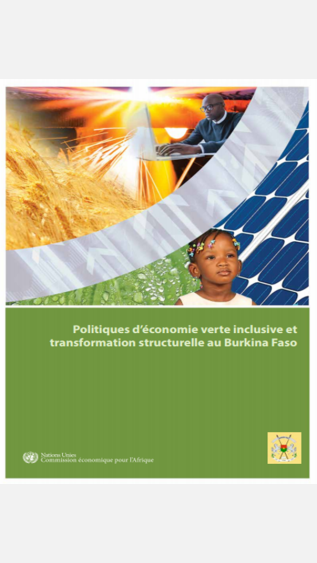
In Burkina Faso, more effective macroeconomic management based on policies to promote sustained and sustainable growth remains a priority goal. However, it is now recognized that maintaining rapid growth is not synonymous with structural transformation or a rapid reduction in poverty. To achieve the above-mentioned goals, growth must be deliberately oriented towards sustainable, inclusive development, predicated in particular on a process of agricultural modernization, industrialization tailored to national circumstances and economic diversification which creates jobs, helps to lower poverty levels and gives wider access to basic services. Accordingly, an inclusive green economy, designed in a spirit of structural transformation, is increasingly recommending itself in policy and strategy debates as the most suitable way of bringing about sustainable economic and social transformation.
With the recognition on the importance of partnership and collaboration to tackle climate change, the project on Low Carbon Development for China and India seeks to understand learnings on options, barriers and success stories on implementability of policies and programmes promoting low carbon development in China and India.
Based on an understanding of similarities and differences between China and India, in 2012, The Energy and Resources Institute of India (TERI), National Center for Climate Change Strategy and International Co-operation, Central University of Finance and Economics and Zhejiang University launched one of the first collaborative efforts between research institutes in China and India on low carbon development. The intended outcome of the project is supporting policy development by facilitating south-south cooperation, creating relevant knowledge and building capacities.
Reductions in the greenhouse gas (GHG) intensity of passenger and freight transportation are possible through adoption of fuel-saving technologies, demand switching between modes, and large-scale electrification of fleets, in addition to other actions. In this study, future scenarios to 2030 and 2050 are the basis for assessment of GHG reduction potentials for major passenger and freight modes (automobiles, buses, trains, aircraft, and oceangoing vessels) across eight regions of the world. New fuel-saving technologies can significantly reduce the life-cycle GHG footprint of both passenger and freight vehicles, but not uniformly worldwide. Countries outside of the Organization for Economic Cooperation and Development (OECD) lag behind OECD countries in GHG reduction potentials for all modes but oceangoing vessels owing to a combination of slower adoption of fuel-saving technologies and a slower decarbonization of electricity generation and other processes. The reduction of GHG intensity will occur more slowly for freight modes than for passenger modes.