

This paper considers the extent to which the Northeast Asian countries - China, Japan, South Korea, and Taiwan - are collaborating as a legitimate group to produce “green” R&D. Forcing a revision of traditional institutional analysis, such collaboration efforts can overlap with existing policies of regional coordination, but they can also pave the way for future, formal coordination efforts. Employing a mixed methods approach which triangulates data based on expert interviews as well as green patenting output over the last 33 years, it is confirmed here that the presence of the Northeast Asian environmental regime is strongly associated with the development of green R&D among countries in the region. It can be further confirmed that Northeast Asia is on the cusp of becoming a genuine counterweight to the existing dominance of the U.S. and Western Europe.
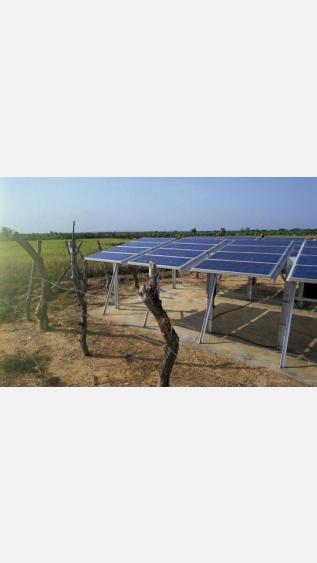
Mike Ehst and Jin Lee of the World Bank's infoDev present highlights from a new report on building competitive green industries and the climate and clean technology opportunities developing countries face.
The African Centre for Technology Studies (ACTS) has published the inaugural issue of the African Technopolitan - a biannual magazine with analysis and commentary on how science, technology and innovation can be harnessed to address Africa’s fundamental development challenges.
The authors document three remarkable features of the Opower program, in which social comparison-based home energy reports are repeatedly mailed to more than six million households nationwide. First, initial reports cause high-frequency "action and backsliding," but these cycles attenuate over time. Second, if reports are discontinued after two years, effects are relatively persistent, decaying at 10-20 percent per year. Third, consumers are slow to habituate: they continue to respond to repeated treatment even after two years. The authors show that the previous conservative assumptions about post-intervention persistence had dramatically understated cost effectiveness and illustrate how empirical estimates can optimize program design.
The policy summary for this paper is available here.
This paper presents three individual cases of a wind turbine producer, a wind farm and a wind blade producer to illustrate how foreign collaboration and technology, choice of deployment strategy, and government policy have influenced the sector to continually improve its technology. The findings indicate that foreign technology and collaboration have had a significant role in helping wind energy technology to develop in China, and were also key elements in stimulating indigenous innovation when high prices held the domestic wind market back from massive expansion. While public policy has played a key role in many aspects of the development of the innovation path, the long-term, enduring goal of developing the required technology was the essential driver. The development of the wind sector occurred alongside the economic development and social improvement of the nation. Thus, while it may be too soon to predict the future path of innovation for Chinese wind energy technology, an emphasis on research and development and increasing international competition is a trend that is likely to continue.
As a global agreement on climate mitigation and absolute emissions reductions remains grid-locked, this paper assesses whether the prospects for international technology cooperation in low-carbon sectors can be improved. It analyses the case of international cooperation on electric vehicle technologies to elaborate on the trade-offs that cooperation such as this inherently attempts to balance– national growth objectives of industrial and technology development versus the global goods benefit of reducing greenhouse gas (GHG) emissions. It focuses on bilateral German-Chinese programmes for electric vehicle development, as well as multilateral platforms on low-carbon technology cooperation related to electric vehicles. Based on insights from these cases studies, this paper ultimately provides policy recommendations to address gaps in international technology cooperation at a bilateral level for ongoing German-Chinese engagement on electric vehicles; and at a multilateral level with a focus on the emerging technology cooperation framework of the United Nations Framework Convention on Climate Change (UNFCCC).