
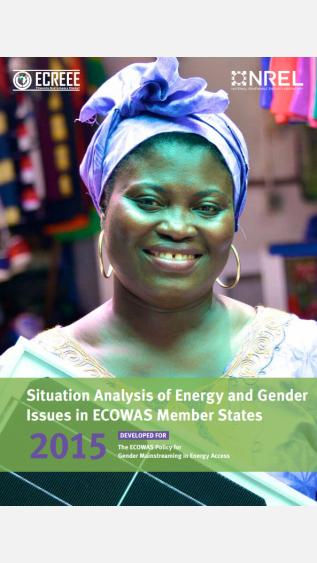
This report contains a fairly comprehensive analysis of the current situation of energy and gender issues in ECOWAS Member States. It outlines the fact that women continue to be excluded from the decision-making process concerning energy policy and also that their human rights continue to be compromised.
The aim of this report is to inform the development of the ECOWAS Policy for Gender Mainstreaming in Energy, which will support national governments in focusing and harmonizing their current efforts at gender mainstreaming, learning from one another, and collectively mobilizing support to achieve the SDGs and the objectives of the Sustainable Energy for All initiative.
The joint report prepared by the World Bank, UNDP–UNEP Poverty-Environment Initiative and UN Women provides a unique quantification of the costs in terms of lost growth opportunities and an estimate of what societies, economies, and communities would gain if the gender gap in agriculture is addressed.
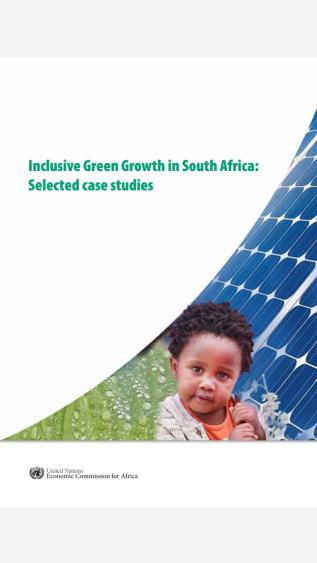
The main objective of the present report is to document good practices and lessons learned on inclusive green growth from selected case studies in South Africa.

The global failure to develop in a sustainable manner has led to attempts to adopt green economy approaches in the context of poverty alleviation and sustainable development. Given South Africa’s high carbon footprint and other negative environmental externalities, the government, in partnership with civil society and the private sector, is taking steps to green its economy. The efforts range from large-scale solar installation projects to small-scale grassroots level projects where green jobs are created for the poor, predominantly women, by paying them for environmental services. This paper addresses if and how green economy can be used to alleviate poverty and protect the environment at a grassroots level. In a project under the management of a local environmental non-governmental organisation (ENGO), poor urban women in Pietermaritzburg, South Africa, are utilising the concept to generate income, improve their livelihoods and contribute to environmental sustainability.
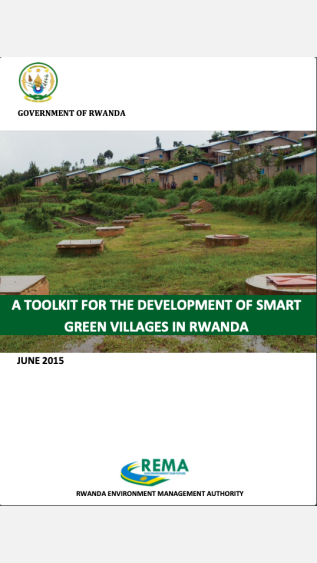
This toolkit will provide guidelines for Smart Green Village implementation and inspire, encourage and support the Users to develop and implement their own transformative strategies for establishing green, resource-efficient, and low-carbon Smart Villages.
For the International Labour Organization (ILO), gender equality has been the core value of its work since its founding in 1919. The pursuit for gender equality is grounded on its recognition that equality is not just an intrinsic value and a right in itself, but also instrumental in achieving economic growth and poverty reduction. This policy brief aims to contribute to the discussion on how gender equality can become an integral part of green economy strategies and how equal access for women and men to green jobs which are decent can be enhanced. The policy brief is targeted at policy makers, social partners and experts in the field working on green jobs/green economy issues.