
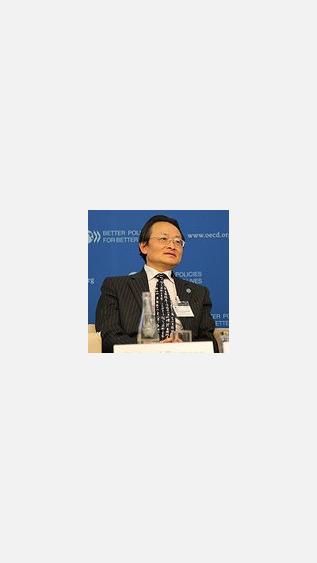
"Making sure the Belt and Road Initiative is sustainable requires a myriad of tailored guidance, tools, best practices, and strategic thinking. It requires the active involvement of those with the knowledge and expertise to build green," says Sheng Fulai, Senior Economist at the UN Environment.
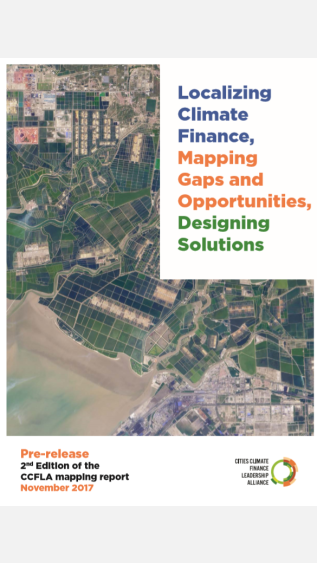
This report presents a global overview of CCFLA member’s responses to close the subnational resilient infrastructure investment gap, highlighting the diversity of financial and non-financial products and services developed by CCFLA members. It provides a background on local and regional governmental climate finance, and describes challenges and opportunities associated with this area.
Transportation mode choices, distances traveled and resulting CO2 emissions are influenced by transport infrastructures. The latter will either lock-in transport patterns in high-emitting modes or accompany low-carbon pathways. At the same time, future mobility demand increase requires rapid build-up of new infrastructures and upgrade of existing ones. Here the authors quantify investments needs for transport infrastructures over time to reach both development and climate objectives in different world regions. Investments needs between world regions are compared and the main factors determining investment needs for each region are analyzed. To do so, the authors build an ensemble of socio-economic scenarios with the integrated assessment model Imaclim-R combining alternatives on model parameters determining mobility patterns. The authors estimate the investments consistent with the passengers and freight transportation trends in the scenarios and identify their main determinants.
This case study applies a contingent valuation approach to estimate how households value different multi-purpose infrastructure (grey or green) for managing flood risk and water pollution. It considers the case of the Gorla water park located north of Milan, in the Lombardy Region of Italy.

The Sustainable Asset Valuation (SAVi) facility brings sustainable development knowledge from UN roundtables to the desks of infrastructure investors.
Climate change will affect all types of infrastructure, including energy, transport and water. Rising temperatures, increased flood risk and other potential hazards will threaten the reliable and efficient operation of these networks, with potentially large economic and social impacts. Decisions made now about the design, location and operation of infrastructure will determine how resilient they will be to a changing climate.
This paper provides a framework for action aimed at national policymakers in OECD countries to help them ensure new and existing infrastructure is resilient to climate change. It examines national governments’ action in OECD countries, and provides recent insights from professional and industry associations, development banks and other financial institutions on how to make infrastructure more resilient to climate change.