
This report reviews examples of policies, regulatory frameworks, utility programmes or other initiatives that have implemented the Efficiency First(E1st) principles in practice.
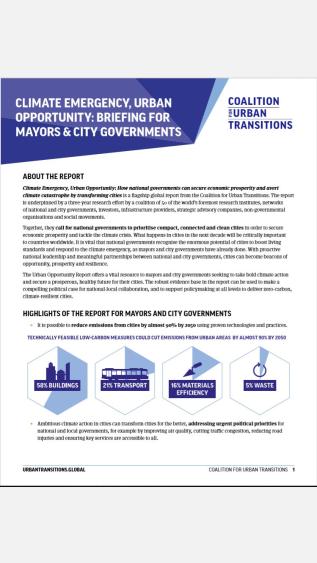
This report calls for national governments to prioritise compact, connected, and clean cities in order to secure economic prosperity and tackle the climate crisis. The report quantifies the necessary investments as well as the potential benefits available to governments willing to invest into zero-carbon cities and it sets out a six-part action plan on advocating for ambitious, coordinated climate action.
The Best Practice Guide for Clean Energy Solutions in Municipal Water Infrastructure intends to assist municipalities in the implementation of cleaner energy technologies and services at their waterworks by suggesting the key elements that municipal officials need to consider to implement a cleaner energy project.
The Global Status Report series tracks progress made towards sustainability in the buildings and construction sector. This 2019 edition shows that the sector is not on track with the level of climate action necessary. On the contrary, final energy demand in buildings in 2018 rose 1 percent from 2017, and 7 percent from 2010. It provides examples of country, city, and private sector actions as well as examples of how the buildings and construction sector is reforming. In addition, through a series of regional roadmaps, it highlights regionally appropriate actions across eight priority areas.
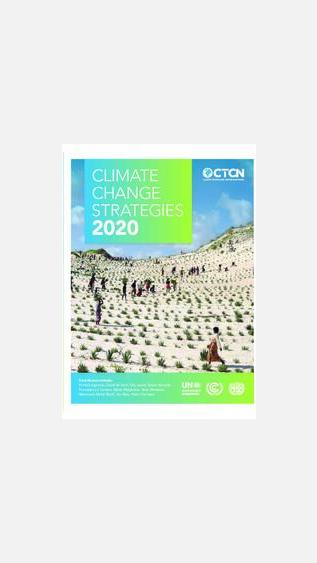
This report highlights the role of technology transfer in the fight against climate change. It includes best practices on energy innovation, sustainable urban development, cross-border collaboration, connecting investors with climate projects, strengthening infrastructure, and guarding coastlines.
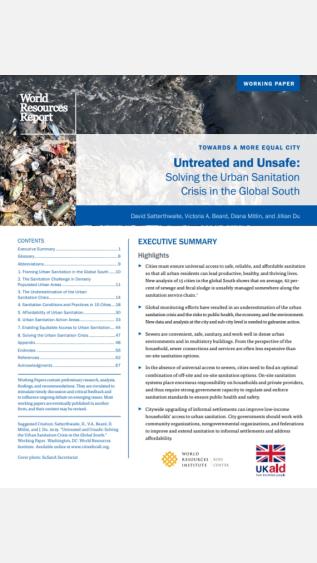
This paper presents new sanitation data from 15 cities that shows almost two-thirds of sewage and human waste is unsafely managed, with access to safe sanitation lowest in South Asia and sub-Saharan Africa.