
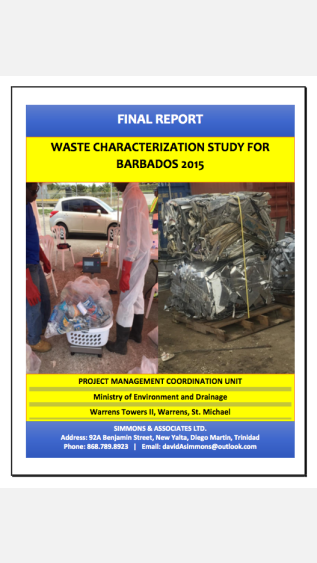
Undertaken over three rounds (April 2015, July 2015 and February 2015) the final report Waste Characterization Study for Barbados 2015 assesses the composition and quantity of the municipal solid waste (MSW) generated in Barbados and any changes which might have occurred in the respective periods.

This document reviews literature to provide a background for the CDKN research project "Gender equality and Climate Compatible Development- Drivers and challenges to people’s empowerment". The project addresses major knowledge gaps in relation to the gender dimension of climate change mitigation, adaptation, and development. Its aim is to strengthen the evidence base of gender-sensitive approaches to climate compatible development (CCD). The project will explore to what extent gender-sensitive approaches contribute to greater gender equality and more effective CCD. It will therefore help to create more nuanced gender analysis of CCD projects, provide compelling evidence of the benefits of gender-sensitive approaches to CCD and translate usable insights for policy and practice while supporting people’s empowerment.
The World Survey on the Role of Women in Development is a UN Secretary-General report mandated by the Second Committee of the General Assembly and comes out every five years. The 2014 report focuses on gender equality and sustainable development, with chapters on the green economy and care work, food security, population dynamics, and investments for gender-responsive sustainable development. The report comes at a crucial moment, as the global community grapples with the definition of the Sustainable Development Goals and the emergence of the post-2015 framework. This report also offers a comprehensive set of recommendations for gender-responsive policy actions and investments towards sustainable development overall, as well as for the selected areas which the World Survey emphasizes.
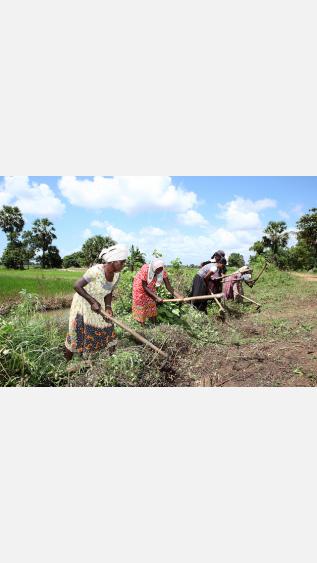
The Knowledge Gateway for Women's Economic Empowerment has launched an e-discussion on "Women and the Environment". The discussion is co-hosted by S
Communications Adviser Páll Tómas Finnsson, who works with the Nordic Council of Ministers on its green growth initiative, discusses the importance of gender to green growth and why the gender dimension is being integrated into all activities forming part of the Nordic Prime Ministers’ green growth initiative.
The aim of this paper is to review existing evidence on the role of renewable energies in bringing gender equity. The paper first explores the evolution of thinking on gender and energy, in particular that practitioners no longer specifically focus on women and stoves (often referred to as “household energy”). Next, the reasons why gender analysis can help those people trying to increase the dissemination of renewable energy technologies are presented. There is a brief description of the gender aspects of household energy, and how different renewable energy technologies can contribute to drudgery reduction and time saving, particularly for women. The role of women in renewable energy is analysed. The paper concludes with an analysis of lessons learnt and recommendations.