

On 14 April 2020 at 20:00 (CEST), CEPS is hosting a webinar on "COVID-19 Shutdown: What recovery to expect?".
The post-corona recovery can both put the EU’s decarbonisation progress back on track – after low-carbon investments will inevitably take a hit – and support economic recovery through the EU’s Green Deal proposals.

This report looks at the many ways in which digital solutions can be implemented on the ground to help the agri-food chain transform itself to achieve more sustainability.
This Policy Brief looks at how circular economy can support EU climate policy, emphasizing that circular economy is more than just another ‘product standards’ policy. It calls for a framework that is able to systematically address trade-offs, a mechanism to steer and monitor progress, and the need to develop and then scale up successful products and processes to create opportunities for new value chains while addressing risks, such as dependency on raw materials.
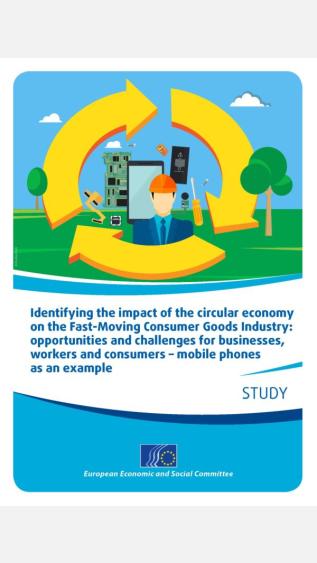
The Centre for European Policy Studies (CEPS) carried out a study on the impact of the circular economy on the Fast-Moving Consumer Goods Industry for the European Economic and Social Committee. The focus of this study is mobile phones – a key product in the consumer electronics sector with a varied price range and lifetime duration.
The study finds that there is a large untapped potential for recovering materials from both the annual flow of new mobile phones sold in Europe once they reach the end of their life and the accumulated stock of unused, so-called hibernating devices in EU households. Achieving high recycling rates for these devices can offer opportunities to reduce EU dependence on imported materials and make secondary raw materials available on the EU market. As such, policy action would be required to close the collection gap for mobile phone devices. Implementing circular approaches in the mobile phone value chain can furthermore lead to employment opportunities in the refurbishment sector. Extending the lifetime of mobile phones can also provide CO2 mitigation benefits, particularly from displacing the production of new devices.

This paper How EU Trade Policy Can Enhance Climate Action addresses the strategic need for a robust EU framework for low-carbon investment.