

The report ‘Going Green: How cities are leading the next economy’ provides an up-to-date overview on the experiences of 90 cities around the world in the transition to the green economy.
The process of urbanisation is advancing rapidly. Towns and cities are now responsible for almost four fifths of global GDP; their share in global resource consumption and CO2 emissions is of a similar order. Cities play a leading role in the transformation from consumptive to eco-efficient societies – in short, to a “green economy”. All actors, private and public need to ensure that economic activities contribute to sustainable development. A sustainable economy is not only economically sensible, but also ecologically indispensable. All responsible institutions have to ensure the creation of enabling frameworks for actors in such a way that the “common goods” are protected and that the long-term conditions for living and economic activity are secured.
This report investigates how cities can use different instruments to integrate the environment into urban planning and management approaches. Including: policy instruments, process instruments, planning instruments and management instruments. The report examines how these instruments are applied to several well established approaches to integrated urban planning. It examines the characteristics, strengths and weaknesses of Integrated Development Plans, City Development Strategies, ecoCity Planning, ecoBUDGET and Strategic Environmental Assessment.
The report also includes 12 case studies of cities that have worked to integrate the environment into their planning processes including: Egypt (Alexandria), Thailand (Bangkok), Republic of Cuba (Bayamo), the Philippines (Bohol), Bulgaria (Bourgas), Canada (Calgary), South Africa (Cape Town), Brazil (Goiânia; Porto Alegre), Columbia (Manizales), Kenya (Nakuru), and the People’s Republic of China (Yangzhou).
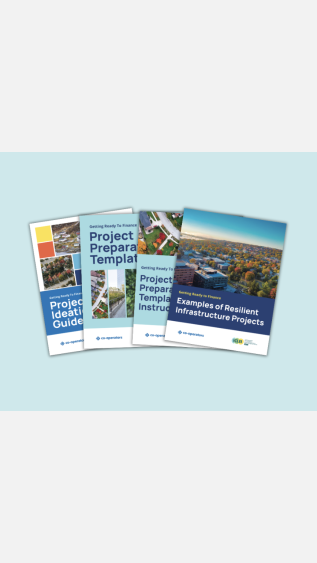
This toolkit is designed to help municipal practitioners in Canada prepare resilient infrastructure projects for financing.
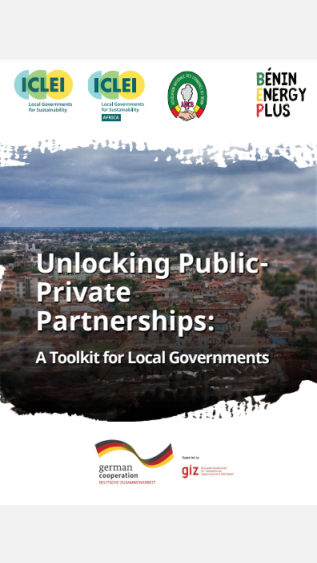
This toolkit aims to serve as a one-stop-shop for local and regional governments to enable the identification, design and implementation of renewable energy projects within a public-private partnership framework.
The EcoLogistics Indicator (ELI) system serves as guide to help measure a city's urban freight performance.