

On 22 January 2019 (12:30 PM EST / 6:30 PM CET) IISD will host a webinar for the Canadian Sustainability Indicators Network (CSIN) on "Smart Technology Uses in Sustainable Development".
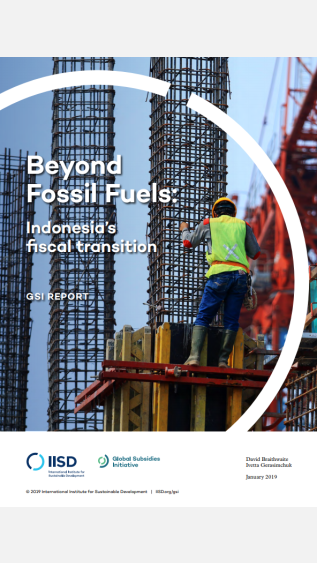
This publication, Beyond Fossil Fuels: Indonesia's fiscal transition, makes a first attempt at an integrated analysis of how Indonesia both taxes and subsidizes production and consumption of oil, gas, coal, and electricity (most of which is generated with coal). The paper also explores lessons learned from Indonesia’s reduction of fiscal dependence on fossil fuels.
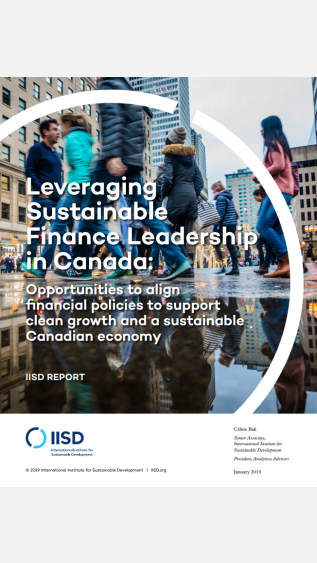
In advance of Canada’s Expert Panel on Sustainable Finance releasing their recommendations on the best finance and investment structures for climate action, Leveraging Sustainable Finance Leadership in Canada sets out a three-year policy roadmap to funnel private investment into a sustainable Canadian economy.
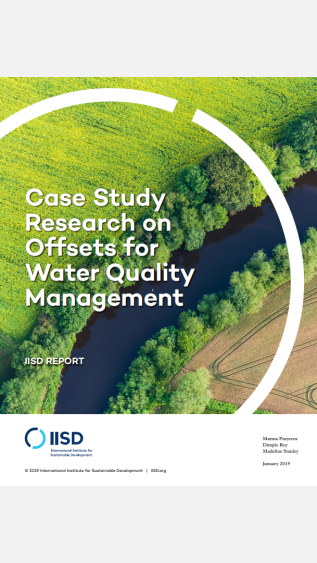
This case study research examines six water quality trading (WQT)/offset programs from Canada, the United States and New Zealand and highlights specific policy and program mechanisms that enabled the programs to achieve their goals of reduced nutrient and contaminant loading.
This report aims to support governments of developed and developing countries in their endeavour to make energy transitions just. It brings together political and communications strategies for a just transition, building on research and case studies of energy transitions that have happened or that are happening in Canada, Egypt, Indonesia, India, Poland and Ukraine.
While the Group of 20 (G20) governments continue to subsidize and support the production and consumption of fossil-fuel-based electricity, some G20 governments have made progress in shifting at least some support away from fossil fuels and increasing taxation of fossil fuels. This working paper brings together examples illustrating how reforms can be enabled and implemented to align the flows of public money with the Paris Agreement and Sustainable Development Goals (SDGs).