
Organisation :
United Nations Environment Programme (UNEP), Office of the United Nations High Commissioner for Human Rights (OHCHR)
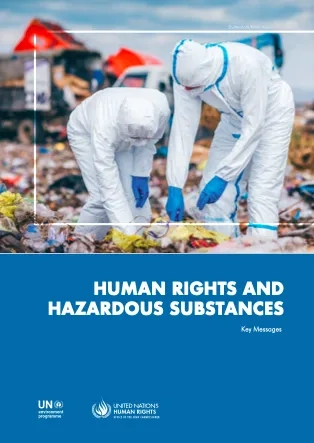
The document presents key messages to highlight the human rights obligations and responsibilities of States and other duty-bearers, such as businesses, to prevent and remedy the harmful effects of hazardous substances. Pollution is the largest source of premature death in the developing world, which disproportionately affects peoples in vulnerable situations reflecting both historical and ongoing discrimination, racism, and power imbalances that have given rise to powerful social movements for environmental justice. The key messages are:
- Ensure a “non-toxic environment” for present and future generations.
- Cooperate internationally to prevent and combat harms from exposure to hazardous substances.
- Guarantee all persons’ access to information about hazardous substances.
- Ensure the meaningful and informed participation of all persons in decision-making processes.
- Ensure accountability and effective remedies for human rights harms caused by hazardous substances.
- Protect environmental human rights defenders.
- Protect, respect and fulfill the human rights of people who are in particularly vulnerable situations.
- Guarantee all human beings the right to benefit from scientific progress and its applications.
- Take a precautionary approach to the handling and management of hazardous substances and potentially hazardous substances.