
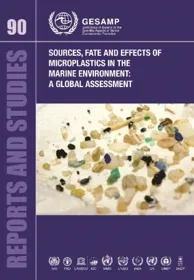
Plastics have become indispensable in many areas of modern life, used for clothing, storage, transportation, packaging, construction and a host of consumer goods. One of plastics greatest properties, its durability, is also one of the main reasons that plastics present a threat to the marine environment.
To understand this issue better, the Group of Experts on the Scientific Aspects of Marine Environmental Protection (GESAMP) was tasked to conduct a global assessment of the sources, fate and effects of microplastics in the marine environment. The principal purpose of the assessment is to provide an improved evidence base to support policy and management decisions on measures that might be adopted to reduce the input of microplastics to the oceans.
The report offers three action-orientated recommendations and three recommendations designed to improve a future assessment.
Action-orientated recommendations:
· Identify the main sources and categories of plastics and microplastics entering the ocean
· Utilize end-of-plastic as a valuable resource rather than a waste product
· Promote greater awareness of the impact of plastics and microplastics in the marine environment
Recommendations for improving a future assessment:
· Include particles in the nano-size range
· Evaluate the potential significance of plastics and microplastics as a vector for organisms
· Address the chemical risk posed by ingested microplastics in greater detail
The Joint Group of Experts on the Scientific Aspects of Marine Environmental Protection (GESAMP) is an advisory body, established in 1969, that advises the United Nations (UN) system on the scientific aspects of marine environmental protection.