
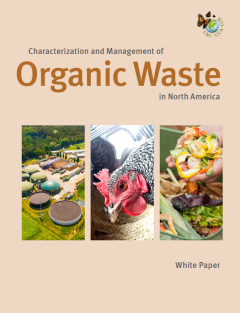
In Canada, Mexico and the United States, organic waste represents a significant component of the waste stream that can be diverted from landfills to other more sustainable waste management practices, including industrial uses and anaerobic digestion processes such as co-digestion and composting. The Characterization and Management of Organic Waste in North America report describes key challenges and gaps that constrain expanded organic waste recovery in North America, as well as relevant policy options and instruments for industry, government and local organizations.
The report recommends the following actions to increase organic waste diversion:
- Improve data collection and data sharing across North America to improve opportunities for data tracking and reporting.
- Better engage the industrial, commercial and institutional (ICI) sector to increase the diversion, processing, measurement and reporting of activities and data.
- Provide ongoing and consistent outreach and education to support the potential concerns of local residents, provide guidance and instruction on proper sorting practices, and advertise the benefits of end-products.
- Increase landfill and waste-to-energy tipping fees for organic waste, to make alternatives such as composting and anaerobic digestion (referring to industrial-scale composting in closed containers) more competitive.
- Analyze options for banning organic materials from landfills.
- Promote or expand incentives (e.g., grants, low-interest loans, feed-in tariffs, renewable portfolio standards) to spur growth related to expanded infrastructure.
- Focus on improving market circumstances and harmonizing markets for end-products derived from organic waste across North America.
- Help residents and businesses to purchase products made from organic waste.
The report also recommends the following activities for trilateral collaboration towards increased organic waste diversion:
- Examine opportunities for cross-border collaboration to improve markets for end-products created through organic waste diversion and processing.
- Collaborate to better document end-markets.
- Expand collaborative efforts to achieve sustainability goals, including zero-waste and circular economy.
- Improve data collection and transparency.