
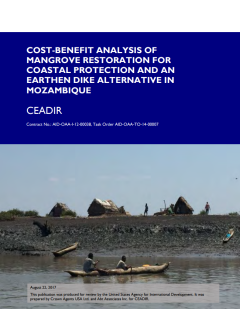
This report presents the findings from cost-benefit analyses of mangrove restoration for coastal protection and an earthen dike alternative in Quelimane, Mozambique. The purpose of the analysis was to inform decisions of USAID/Mozambique-funded Coastal City Adaptation Project (CCAP) and the Government of Quelimane to protect the most climate-vulnerable residents in the peri-urban areas of this coastal city from climate change impacts, including frequent flooding and high storm surges.
The findings show that the earthen dike was not financially or economically viable due to the alternative’s net negative present values because of high capital costs to build and maintain it, combined with low benefits from storm protection. The low benefits from storm protection resulted from the low average value of the informal sector housing in the study area communities, which are typically made of mud and mangrove poles. Mangrove restoration had positive financial and economic net present values that exceeded the earthen dike alternative primarily because it provided substantial additional benefits that the earthen dike did not. In addition to the storm protection benefits, some stakeholders noted the importance of mangroves for water quality, fisheries, honey production, and aquaculture (especially for shrimp, fish, and crabs). The economic analysis also included extramarket benefits of mangrove restoration, such as carbon sequestration.