
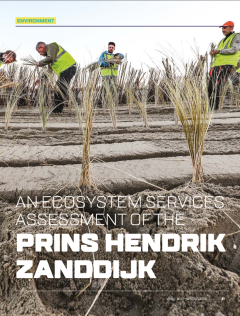
This study examines which and, if possible, how much more ecosystem services are provided by the most recent nature inspired coastal protection project Prins Hendrik Zanddijk in the Netherlands, in comparison with a traditional concrete and asphalt construction. First, the type and size of habitats and associated ecosystem services are identified and, subsequently, the relevance of each ecosystem service is described and quantified.
The study finds that the creation of the Prins Hendrik Zanddijk generates both positive and negative effects on the ecosystem services as the soft coastal protection project replaces shallow sand bank areas with both beach and tidal marsh area. The positive effects outweigh the negatives, with additional benefits created by the Prins Hendrik Zandijk quantified at 0.4 to 1.07 million €/year, mainly due to enhanced fish production, climate regulation, water quality regulation, and erosion prevention.