
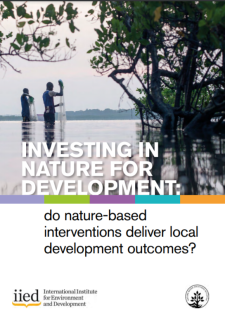
This paper provides insights into the types of direct, site-based interventions that can help, or hinder, the achievement of development outcomes for local people and, ultimately, the delivery of the post-2020 Global Biodiversity Framework and Sustainable Development Goals.
It considers a wide range of interventions and development outcomes, both positive and negative. Focusing specifically on poorer (low- and lower-middle-income) countries, it explores documented evidence that nature-based interventions or investments in nature (including protection, management, restoration, and harnessing nature for food production), can deliver tangible development outcomes for local people, including jobs, food security, empowerment, as well as resilience to climate change. It also gives powerful insights into how nature can contribute to COVID-19 recovery plans.