
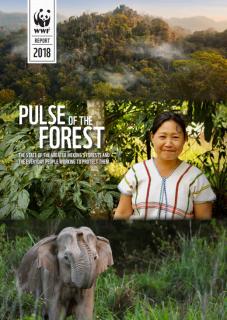
The Greater Mekong, which encompasses the countries of Cambodia, Laos, Myanmar, Thailand and Vietnam, is one of the few places on Earth where the links between human and ecosystem connectivity are so vital. A new species is discovered every two days on average in the region, and its forests are teeming with life – from tigers and elephants to saolas, one of the world’s rarest large mammals.
Like many other regions of the world, the Greater Mekong is at a crossroads. The economies in the region are booming, and this brings the challenging task of balancing legitimate needs for economic development while safeguarding forest ecosystems and the ecosystem services they provide.
Deforestation is a major threat both to ecosystems and local economies. The Greater Mekong was the world’s most densely forested area in the 1970s but has now lost a third of its tree cover. It is on course to lose another third between 2010 and 2030 if current trends continue.
If we want to retain the Greater Mekong’s rich biodiversity, urgent action is needed from all stakeholders – businesses, governments, communities and civil society. This Pulse of the Forest report highlights the state of the Greater Mekong forests, and solutions that are already being implemented and showing results, demonstrating that positive change is possible when all stakeholders come together for a common cause. From the woodlands of the Central Annamites to villages in Myanmar, the stories featured in this report show how people are bucking the deforestation trend to bring their forests back to life.