
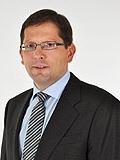

Luc Willems, Vice-secretary-general of the Benelux Union and Hans Mooren, Senior policy advisor, Secretariat-General of the Benelux Union, discuss the complexity of measuring and monitoring green growth in cross-border regions and present findings from the joint OECD-Benelux project aimed at defining solutions.

The Secretariat-General of Benelux Union supported the challenging project “Indicators of Local Transition to a Low Carbon Economy in the Benelux” in cooperation with the OECD in Paris. The project was carried out within the OECD LEED Programme framework under the supervision of Dr. Cristina Martinez-Fernandez. The objective was to define measurable indicators for the Benelux and its member countries that can inform over time about the transition to low-carbon economic and industrial activities dealing with two elements being job-creation and economic development in specific areas of growth and sustainable development. In particular the cross border aspect of the project was generally considered to be an innovative element. Workshops organized in both border regions brought together local and international experts and provided necessary data and information.
The final report “Green growth in the Benelux: Indicators of local transition to a low-carbon economy in cross-border regions” provides nine core policy recommendations to local and national authorities:
- Establish a method by which cross-border stakeholders can identify the main variables
- Ensure data collection provides flexibility to isolate local sources of emissions.
- Identify appropriate institutions to collect and report data in a consistent format. This thus provides comparative analysis on headline indicators at the local, national and international level.
- Support data collection projects that are devised and implemented by local stakeholders as a way to cement the operation of cross-border governance.
- Develop processes that engage a full range of local stakeholders and that equip them to participate in the discussions and projects.
- Develop and encourage cross-border groupings of public and elected officials to provide input into large transition projects and thus strengthen the capacity of the Benelux Union.
- Strengthen innovation capacity in the Benelux Union through international co-operation in order to re-position new industrial ecologies and clusters while addressing the challenges of green growth transition.
- Align qualification systems, accreditation and content across borders. Green education and green entrepreneurship can provide a focus for skills recognition and skills activities by the educational institutions in the Benelux.
- Public procurement could be used to support and encourage new ‘green’ markets and could be encouraged by all levels of government and the Benelux Union.
These actions are needed to support the preparation of policy within the framework of the Europe 2020 Strategy at the national, regional and local level. The cross border nature of the study makes a cross border follow up possible. At this moment, the different Benelux stakeholders are developing strategies for the implemention of the recommendations and the Secretariat-General of the Benelux Union is committed to fully support the follow up of the project.