
A swift and bold response is needed to address the devastating impact of the climate, health and economic crises. African finance ministers have called for an injection of external assistance of $100 billion each year for the next three years to close the financing gap of more than $345 billion identified by the IMF. Finally, for climate, health, and the economy, one thing is clear: the entire international community must cooperate to reset and rebuild a stronger multilateral framework to respond to global crises and provide equitable, just and transparent processes and systems for the management and implementation of rapid, monitorable solutions.
Powering Development in Climate Vulnerable Areas: The Role of Decentralized Solar Solutions in India
This report explores the impacts of climate related events on electricity needs, whether decentralized solar solutions consider climate change in the lifecycle of the installation, and if not, then what factors need to be considered.
'End in Sight' finds the renewables rollout can be accelerated beyond current government plans, to reach 40% by 2028, and therefore, coal can be phased out earlier than planned.
This report connects the potential for resource efficiency, via circular economy and the processes that retain product value within the systems, with a policy-relevant lens.The report also highlights the systemic barriers that may inhibit progressive scale-up including regulatory, market, technology and infrastructure barriers, and how they could be overcome.
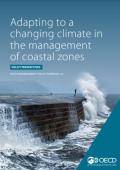
This paper provides a comprehensive assessment of the recent and projected socio-economic development of coastal areas. It reviews the environmental pressures exerted by human activities on coastal areas, as well as the impacts of climate change that exacerbate existing challenges.
The new Clean Energy Mini-Grid Policy Development Guide aims to help policymakers navigate the renewable mini-grid market, providing them with tools and recommendations on how to approach policies and regulations in this space.
This report examines a range of zero-carbon bunker fuel options that are considered to be major contributors to shipping’s decarbonized future: biofuels, hydrogen and ammonia, and synthetic carbon-based fuels. The comparison shows that green ammonia and green hydrogen strike the most advantageous balance of favorable features due to their lifecycle GHG emissions, broader environmental factors, scalability, economics, and technical and safety implications.

This report measures the alignment of Liechtenstein's financial sector with climate objectives, as part of the PACTA 2020 coordinated climate assessments.
This report seeks to understand how financing costs across different energy technologies and markets has changed over the last twenty years. It forms the first output of the Energy Transition Risk and Cost of Capital Project (ETRC) initiated by the Oxford Sustainable Finance Programme.
The EU is taking measures to address deforestation and other environmental and human rights impacts of its consumption. This report aims to support these efforts by providing new data and insights on the EU’s role in driving deforestation and conversion through the import, use and consumption of key agricultural commodities.