
This report presents the first systematic analysis of significant emitters and examines the robustness of net zero pledges as well as their scope. It further looks for entities have components of a credible plan in place, such as interim targets, a reporting mechanism and clarity on use of offsets. This report does not assess whether such plans are internally coherent nor compatible with a global trajectory to the 1.5°C Paris Agreement target.

In this report, using an entire industry of a G7 country as a case study, Planet Tracker shows how the depletion of the natural world negatively impacts financials, and how improved sustainability could drive better financial performance. Analysts and portfolio managers must therefore understand and account for natural capital and its interplay with financial performance.

This report first assesses emerging literature to define key concepts for recovery and introduces criteria to distinguish public policy actions aimed at promoting a green and long-term vision recovery. An analysis framework is then provided: The Green Growth Index to help governments find sustainable development gaps, using green growth dimensions, to formulate ex ante actions aligned with them that foster greater climate resilience from the local.
This study addresses the critical need for a private sector focused market assessment of plastics recycling in the Philippines. Reuse, refill and new delivery model aspects of a circular economy for plastics are evaluated, but the primary focus of the study is plastic recycling, where scalable private sector investment solutions are greatest.
This report focuses on the market assessment of plastics value chains and the recycling market in Thailand with the overall goal of identifying the opportunities and barriers for plastics circularity in the country.

This study addresses a critical need for a market assessment of the plastics value chain in Malaysia.
This working paper estimates multipliers for spending in clean energy and biodiversity conservation to help inform stimulus measures for a post-COVID-19 sustainable recovery.
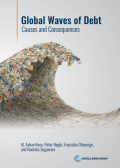
The size, speed, and reach of the postcrisis debt buildup in Emerging market and developing countries(EMDEs) raises concerns about its potential consequences for macroeconomic and financial stability. To shed light on these consequences, this study presents the first indepth analysis of four waves of debt accumulation, puts the current debt wave into historical perspective, analyzes national episodes of debt accumulation, examines the links between debt accumulation and financial crises, and draws policy lessons. The study employs a wide range of approaches, including event studies, econometric models, country case studies, and a detailed review of historical episodes.
In this report, Carbon Tracker analyses the financial viability of new gas-fired power plants in Italy. Carbon Tracker compares the cost of gas-fired power plants with those of a clean energy portfolio providing the same grid services (monthly energy, peak capacity, and flexibility).
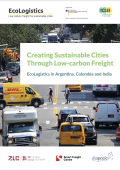
The purpose of this report is to review existing urban freight movement characteristics across the nine EcoLogistics project cities in Argentina, Colombia and India, provide an account of baseline GHG emissions (2019) from urban freight and identify possible interventions to minimise its negative impacts.