
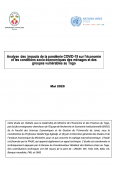
As the technical lead for the socio-economic response, UNDP and its country offices worldwide are working to assess the socio-economic impacts of the COVID-19 pandemic on economies and communities. This report contains the preliminary findings of the socio-economic assessment conducted for Togo.
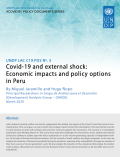
As the technical lead for the socio-economic response, UNDP and its country offices worldwide are working to assess the socio-economic impacts of the COVID-19 pandemic on economies and communities. This report contains the preliminary findings of the socio-economic assessment conducted for Peru.
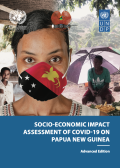
As the technical lead for the socio-economic response, UNDP and its country offices worldwide are working to assess the socio-economic impacts of the COVID-19 pandemic on economies and communities. This report contains the preliminary findings of the socio-economic assessment conducted for Papua New Guinea.
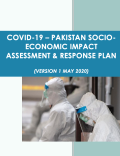
As the technical lead for the socio-economic response, UNDP and its country offices worldwide are working to assess the socio-economic impacts of the COVID-19 pandemic on economies and communities. This report contains the preliminary findings of the socio-economic assessment conducted for Pakistan.
As the technical lead for the socio-economic response, UNDP and its country offices worldwide are working to assess the socio-economic impacts of the COVID-19 pandemic on economies and communities. This report contains the preliminary findings of the socio-economic assessment conducted for Nigeria's North East Region.
As the technical lead for the socio-economic response, UNDP and its country offices worldwide are working to assess the socio-economic impacts of the COVID-19 pandemic on economies and communities. This report contains the preliminary findings of the socio-economic assessment conducted for Nigeria.
This report finds that a new international treaty on plastic pollution will benefit both the environment and business, and would complement existing initiatives –accelerating global efforts to tackle the eradication of plastic pollution.
The report sets out the opportunity for a new global UN treaty on plastic pollution to significantly...
Fiscal policy across the globe is rightly focused on fighting the COVID-19-induced economic crisis. But the climate change crisis remains, as does the need for decisive policy action to address it. Indeed, decisions taken now to address the COVID-19 crisis may shape the climate, and human health, for decades. This note calls for fiscal policymakers to “green” their response to this crisis to prevent one crisis leading to another. Public support for such measures may be higher after the COVID-19 crisis.
This report presents an overview of recently adopted climate policies, climate-relevant responses to the COVID-19 pandemic and a state of play of NDC and LTS submissions in 25 countries and regions.
The Greeness of Stimulus Index (GSI) assesses the effectiveness of the COVID-19 stimulus efforts by G20 countries in ensuring an economic recovery that takes advantage of sustainable growth opportunities, and builds resilience through the protection of the climate and biodiversity. It provides a method to gauge the current impact of the COVID-19 responses, to track countries’ progress over time, and to identify and recommend measures for improving the effectiveness of those responses.