
This report lays out a blueprint for a collaborative effort to create the right conditions for sensible, innovative waste management in key cities and regions where ocean plastic inputs are currently largest.
This report is one of the first of its kind to quantify primary microplastics leakage and to demonstrate that these primary microplastics are globally responsible for a major source of plastics in the oceans.
The BNC+ Framework describes the approach that the development as well as the monitoring of Blue Natural Capital (BNC) projects should take to determine and measure positive impacts, while also managing risks.
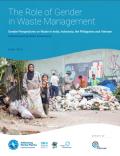
This report provides an assessment of women's role in the waste management sector in India, Indonesia, the Philippines, and Vietnam.
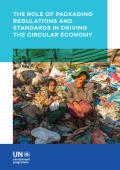
This report aims to review the packaging policy interventions to address the challenge of plastics leaking into the environment, with a particular focus on the Association of Southeast Asian Nations (ASEAN).
This brief introduces a framework to help countries tackle the climate crisis and build resilience as an integral part of their recovery from the coronavirus disease (COVID-19) pandemic.
The objectives of this report are first to describe the patterns and changing structures of the Sub-Saharan Africa (SSA) livestock sector and secondly to explore innovations that can help to address the complex trade-offs involved in investing in the development of a sustainable livestock sector.
This report offers ten broad recommendations for industries and governments in achieving zero emissions by 2060
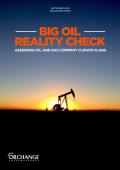
This discussion paper measures oil and gas company climate plans against ten minimum criteria, focusing on the ambition, integrity, and ability necessary to implement a just transition and achieve a 1.5°C aligned managed decline of oil and fossil gas.
This book observes that the cost of low-carbon technology (LCT) is decreasing while investment, trade, and innovation in this sector are on the rise.